
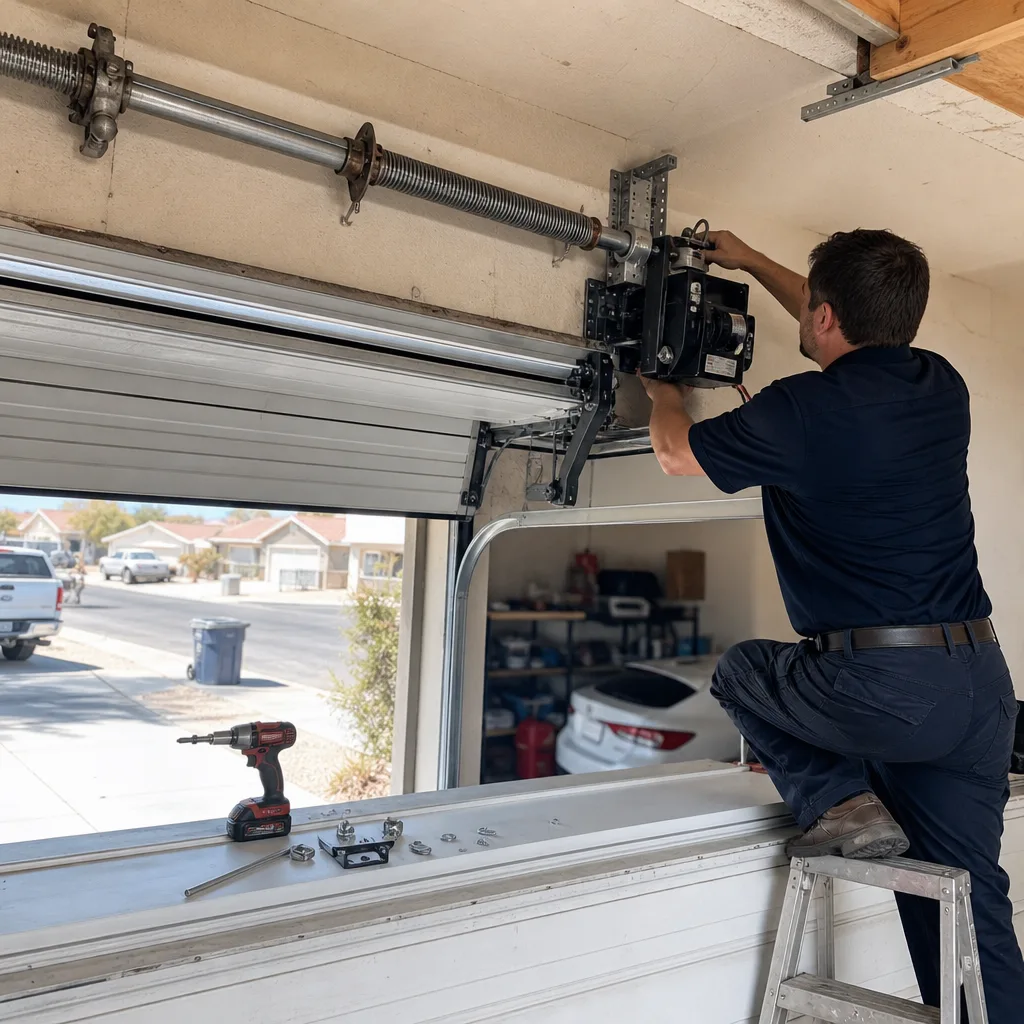
Last updated November 16, 2026
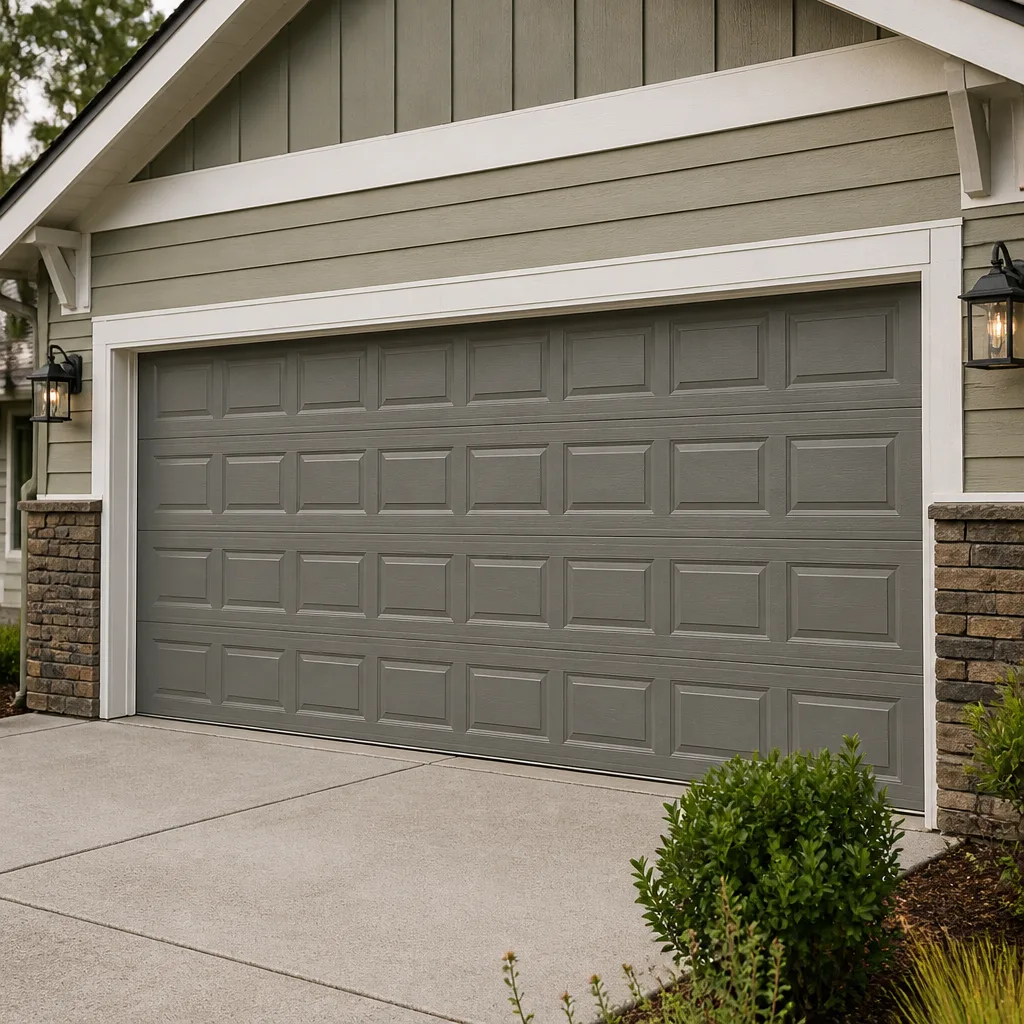 Raised-panel steel
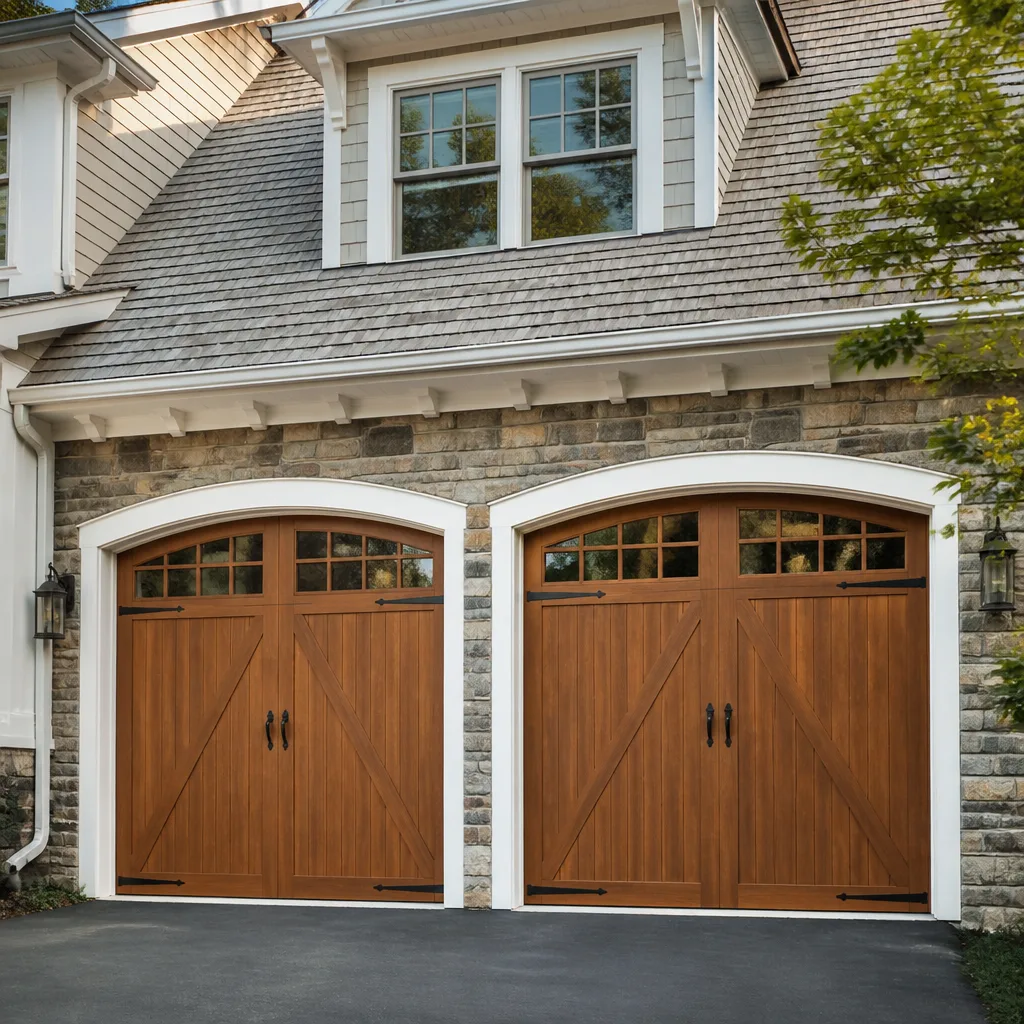 Carriage house
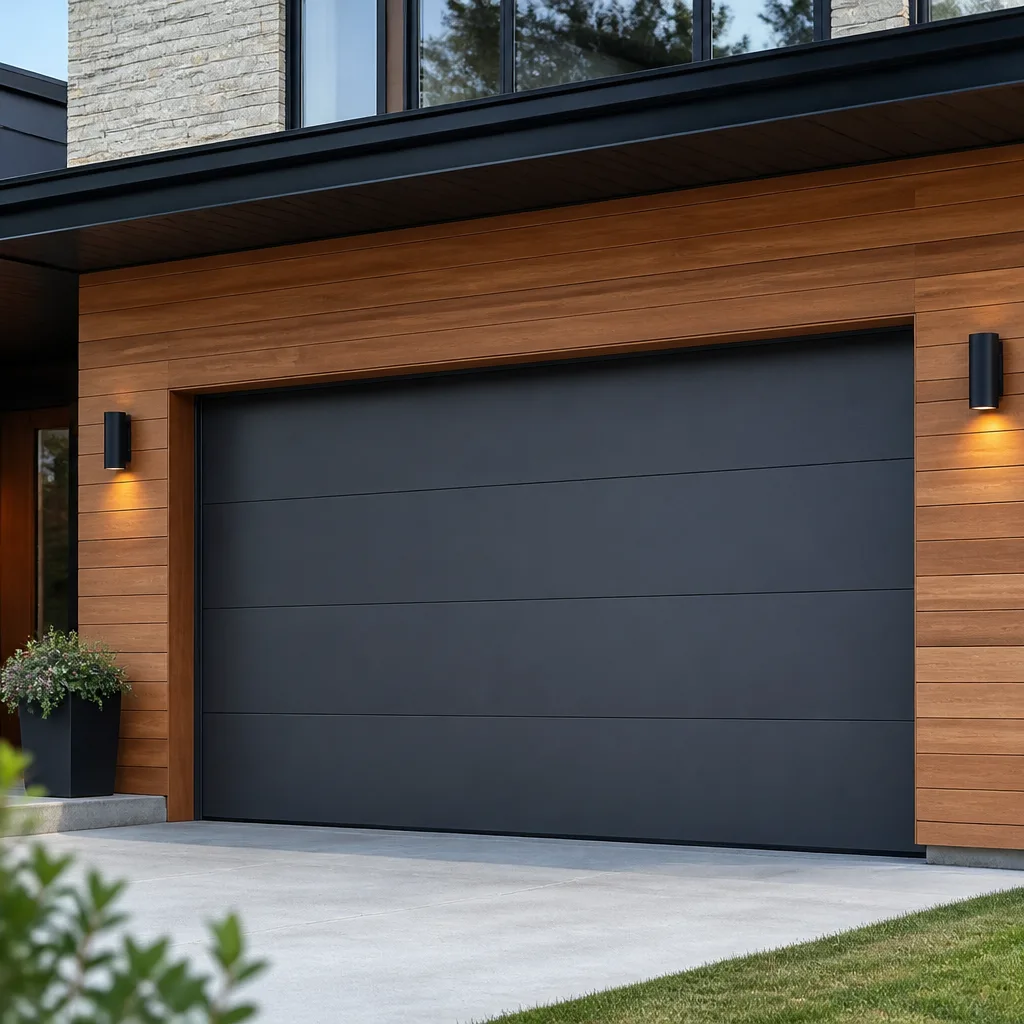 Modern flush
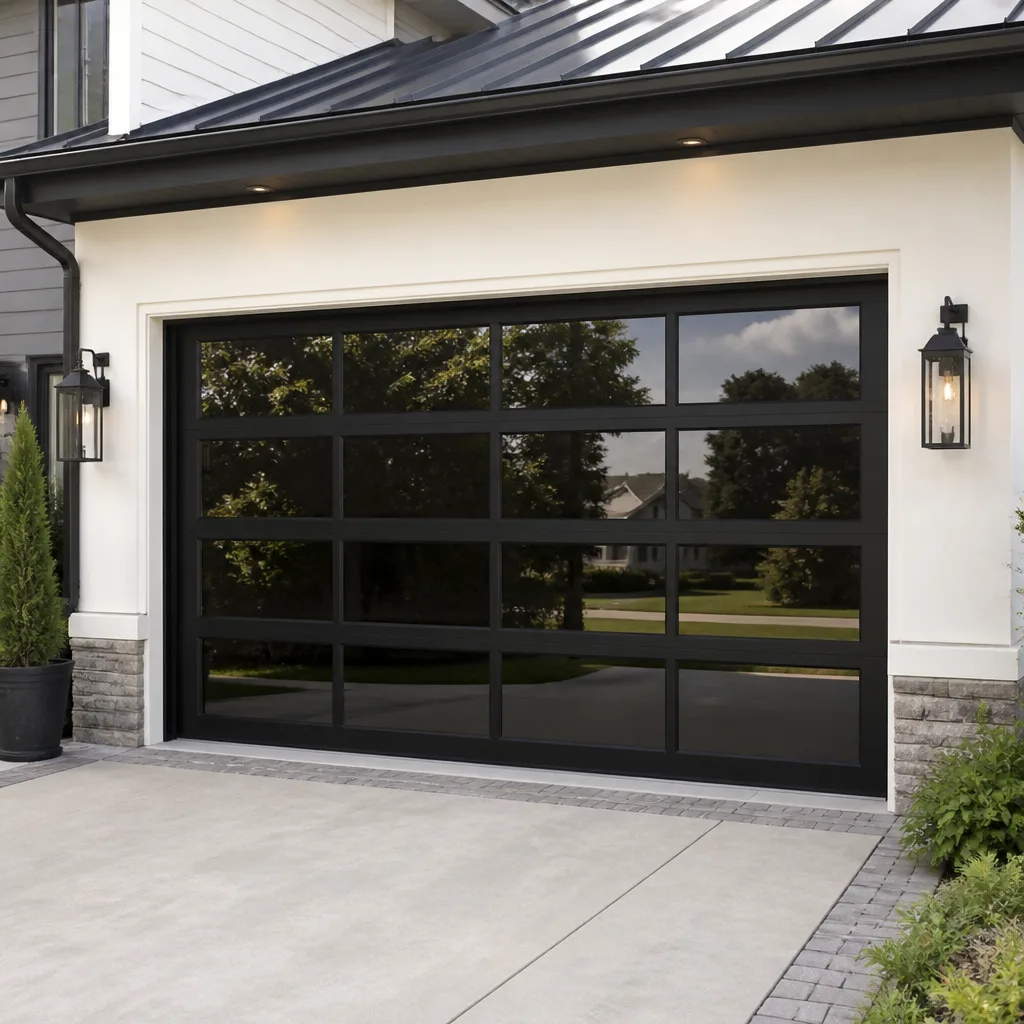 Full-view glass
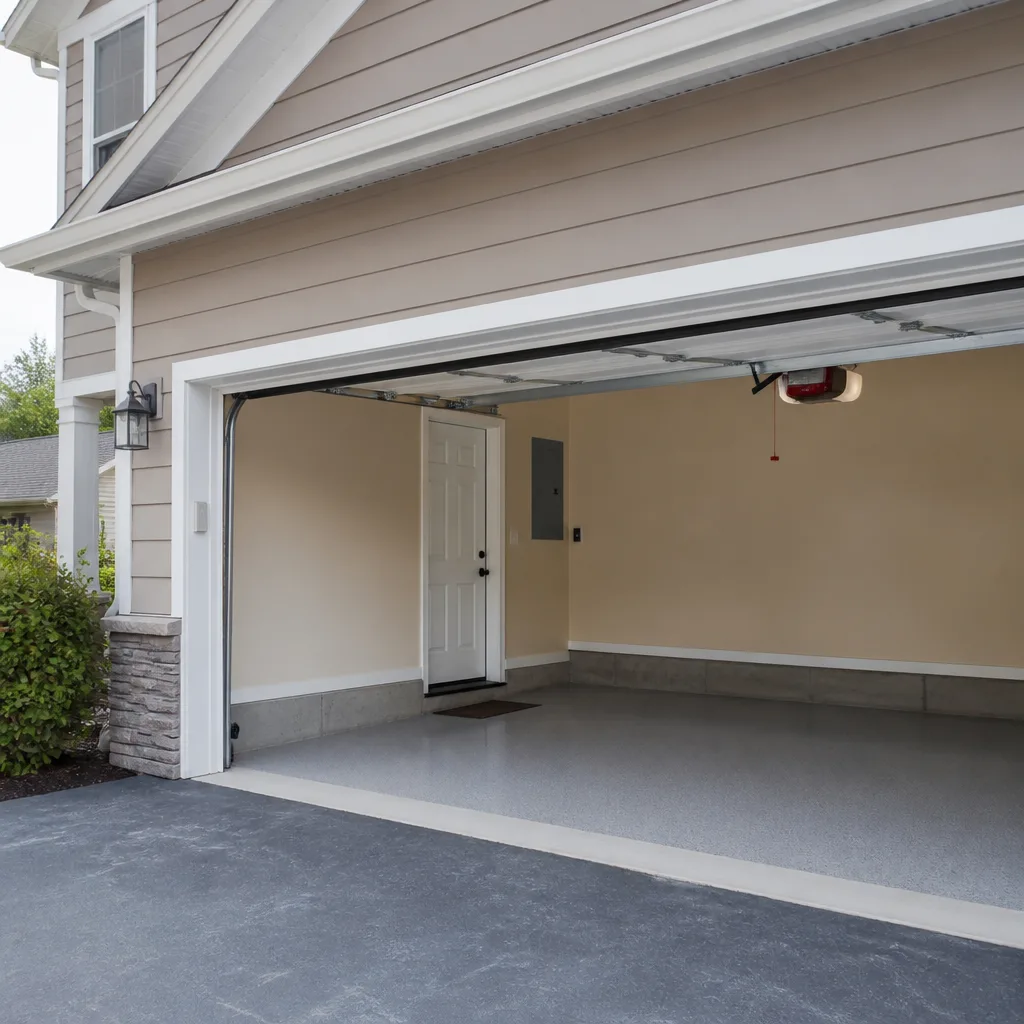 LiftMaster openers
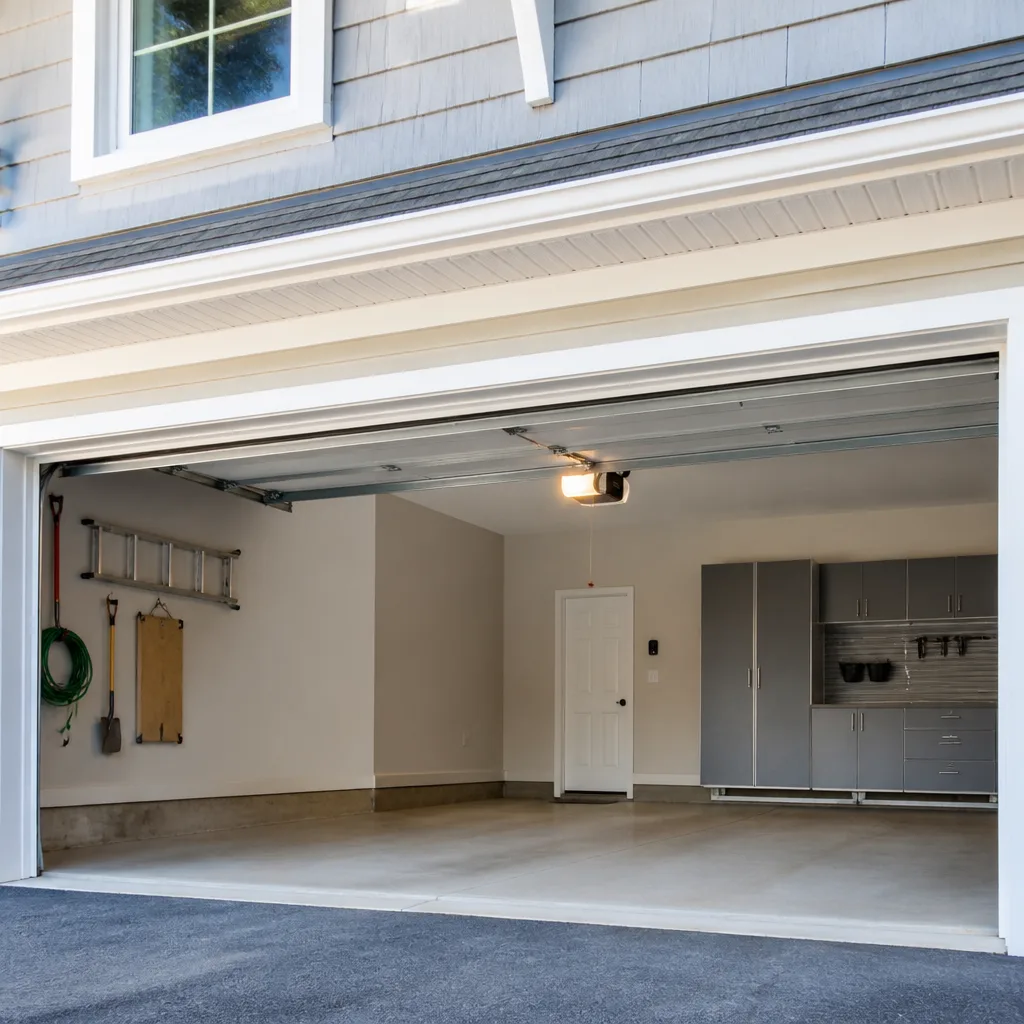 Chamberlain openers
Full 25-point door and opener safety check with every visit - springs, cables, rollers, tracks, and your LiftMaster or Chamberlain opener included
You get a price before we start. It does not change when the pro arrives.
Get your free estimateGarage Door Repair Maintenance Checklist for Paradise Homeowners
Lubricating your springs in July in Paradise is like applying sunscreen at midnight. The timing defeats the purpose. Heat-thinned lubricant runs off the tracks within days, leaving metal dry right when thermal expansion stress peaks. Most maintenance checklists were written for temperate climates with four gentle seasons. Paradise doesn’t have those. It has a long furnace season, a windy spring that throws dust into every seam, and a mild winter that lulls you into skipping the one inspection that matters. This guide sequences garage door maintenance around the stressors you actually live with in Paradise, Nevada, with specific months for each task and the checks that catch small problems before they strand your car.
Quick Answer
A garage door maintenance checklist for Paradise should be sequenced around heat, dust, and wind rather than a generic spring-and-fall calendar. In practice, that means lubricating moving parts in late spring before peak heat, testing the bottom seal after every dust event, inspecting cables and tracks monthly through summer, and doing the heavy inspection in the cooler months. You’ll also need to know which lubricants hold up above 110°F and which popular brands thin out in a Las Vegas-area garage.
Styles & brands we work with
- Raised-panel steel
- Carriage house
- Modern flush
- Full-view glass
- LiftMaster openers
- Chamberlain openers
Table of Contents
- Why a Standard Four-Season Checklist Fails in Paradise
- Choosing a Lubricant That Survives a Paradise Summer
- The Monthly Walk-Around: A 10-Minute Route
- Testing Bottom Seal Integrity After a Dust Storm
- The Cable Tension Visual Check You Can Do Safely
- When Heat Warps a Panel or Shifts a Track
- The Annual Deep Inspection by Season
- Opener Checks Most Homeowners Skip
Why a Standard Four-Season Checklist Fails in Paradise
Garage door maintenance advice is usually written for places where summer tops out around 85°F and spring is wet. Paradise runs much hotter for much longer. Metal expands through the day as the door faces direct sun, then contracts overnight as temperatures drop. That repeated expansion and contraction cycle loosens fasteners, thins lubricant, and slowly shifts tracks out of alignment. A checklist that treats summer like a mild season misses the one stretch when your door is under the most stress.
Dust is the second factor. Wind events in and around Paradise carry fine grit that settles into hinges, rollers, and the bottom seal. Given enough time, that grit acts like sandpaper on moving parts. A door that gets lubricated but never cleaned first just grinds the grit deeper.
Winter here is mild, which sounds like good news but creates a blind spot: it’s easy to skip inspections because nothing seems urgent. That’s exactly when you should be checking the parts that failed quietly during summer.
The practical result is a different rhythm:
- Late spring (May): Clean and lubricate everything before the heat peaks.
- Summer (June-September): Monthly visual walks focused on tracks, cables, and alignment.
- Post-dust (any month): Bottom seal and hinge inspection.
- Fall and winter (October-February): Deep inspection, fastener tightening, and opener testing.
If you’d rather hand the deep inspection to someone who does it every day, our garage door repair technicians work in Paradise and can take a look.
Choosing a Lubricant That Survives a Paradise Summer
Most garage door lubricant problems in Paradise start with the wrong product. A thin general-purpose oil that works fine in a milder climate will run off vertical tracks once the garage interior climbs past 110°F. When that happens, the metal is left dry while the lubricant pools on the floor.
Here’s what to look for:
- White lithium grease (heavy grade): Holds up well on hinges and rollers at high temperatures. Apply sparingly; too much attracts dust.
- Silicone spray: Good for tracks and weatherstripping. Doesn’t gum up, but reapply more often in summer.
- Lithium complex or synthetic grease: Best for springs and bearings when summer heat is the main concern.
- Light household oil or spray: Works for a week or two in summer, then leaves parts dry. Skip it.
The bigger rule is simple: never mix products on the same part. Residual oils and greases react with each other and turn into a gummy paste that attracts even more dust. Pick one product per part and stick with it.
Apply lubricant to hinges, rollers, springs, and the bearing plates, not to the tracks themselves. Tracks should be wiped clean and left dry. Greasing tracks is one of the most common mistakes and it collects grit instead of letting rollers glide.
Late spring is the right time to do the full lubrication pass in Paradise. That way the grease is fresh when the heat arrives, and it doesn’t have to survive months of dust first.
The Monthly Walk-Around: A 10-Minute Route
A short monthly check catches most of what goes wrong with a garage door in Paradise. It takes about ten minutes and requires nothing more than your eyes and ears. Do it in the early morning, before the garage heats up.
- Look at the tracks from the side. They should be vertical and parallel. A hairline tilt means something has shifted.
- Watch the rollers in the tracks. Any roller that looks wobbly or chipped is on its way out.
- Check the cables visually. Look for frayed strands or kinks, not tension. More on that in the cable section below.
- Inspect the hinges at each panel joint. Loose screws are common in summer and easy to tighten.
- Run the door and listen. A healthy door makes a smooth mechanical sound. Grinding, squealing, or a sudden pop signals a problem.
- Look at the bottom seal. Any visible gap or tear means air, dust, and sometimes water are getting in.
- Check the photo-eye sensors at the base of the tracks. Wipe off dust and confirm they see each other.
In our experience serving Paradise, most repeat calls come from problems that were visible in a walk-around for weeks before the door actually failed. A loose hinge becomes a bent track. A worn roller becomes a snapped cable. Fast diagnosis, lasting fix often just means catching these things early.
One caution: run the door with the door in sight and never with a hand anywhere near the tracks. A closing door carries real force.
Testing Bottom Seal Integrity After a Dust Storm
The bottom seal is the single most skipped check on a Paradise garage door. It’s the rubber strip that runs along the lowest panel where the door meets the floor. Its job is to keep dust, wind-blown grit, and insects out of the garage. When it fails, you might not notice until your garage is full of fine dust after the next windy day.
Here’s how to test it safely without lifting the door:
- Close the door fully and stand inside the garage.
- Inspect the seal along its whole length for tears, flat spots, or sections that have pulled away from the panel.
- Look for daylight underneath at any point. A visible line of light is a leak.
- Lay a piece of paper on the floor and close the door on it. Pull gently. If it slides out with no resistance, the seal isn’t making contact there.
- Check the seal on both the inside face and the outside face. Sun exposure often cracks the outer edge first.
If any section fails the paper test, the seal has compressed. Seals are rubber or vinyl and they harden over time in Paradise heat, which is why a strip that worked fine two summers ago may now leak. Replacement is a straightforward job, and doing it before the windy season saves you a garage full of dust.
While you’re crouched down there, check the jamb seal on the sides too. It fails the same way and often at the same time.
The Cable Tension Visual Check You Can Do Safely
Garage door cables are under extreme tension. They hold the entire weight of the door in balance with the springs. Touching them, feeling for tension, or trying to adjust anything connected to them is dangerous and can cause serious injury. Do not put your hands on cables or springs, ever. Leave the hardware to a trained technician.
What you can do safely is look. A visual check catches most early cable problems before they cause a door to drop or jam.
- Stand back from the door and look at both cables. They should run in straight lines from the bottom bracket up to the drum at the top.
- Look for kinks or sharp bends in the cable. A kink means the wire is stressed and may fail.
- Look for fraying near the drum and at the bottom bracket. Broken strands look like stray hairs.
- Look for slack. If a cable appears loose when the door is closed, that’s a problem for a professional to assess.
- Listen for pops. A single loud pop when the door moves often means a cable has jumped its drum.
Any of those signs means stop using the door and get it checked. A cable that fails while the door is up can bring the door down hard. Our garage door opener repair team can assess this kind of cable and hardware issue along with the opener itself, since the two work together under load.
Cable replacement isn’t an upgrade or a tune-up. It’s a safety repair. When we make one, we also check the spring balance because a failed cable usually means the springs have been carrying uneven load.
When Heat Warps a Panel or Shifts a Track
A wavy or slightly bowed panel on a Paradise garage door isn’t just cosmetic. Panels that warp from heat often signal a larger alignment problem, especially if the warping is at the edges where the panel meets the tracks. The same is true of a track that looks a fraction off vertical: that small tilt often means the whole door’s weight has shifted.
Look for these signs:
- Bow in the middle of a panel. Mild bowing is often seasonal. Buckling that doesn’t flatten out when the sun leaves the door is a real problem.
- A track that looks uneven. Stand at the door and sight down each track. Both should look perfectly straight from top to bottom.
- Rubbing or scraping marks on the tracks. These show the rollers are no longer centered.
- Visible gaps at panel joints. Gaps that weren’t there last year mean panels have drifted.
Panels on steel doors can warp in extreme heat, and thermally broken or insulated designs survive better. Whichever door you have, the fix depends on the cause: a warped panel from heat, a bent track from a minor impact, or a genuine structural drift from fastener loosening. Our technicians have up to 8 years of experience diagnosing these differences, and we work with the brands you already own, including Clopay and Wayne Dalton. We also service Amarr and Raynor doors, so most Paradise homes are covered without a dead end. If the door needs more than a repair, our garage door repair team handles repair decisions and installation together.
The Annual Deep Inspection by Season
Once a year, ideally in the cooler months, do the tasks that need more time than a monthly walk-around. In Paradise, fall is the best time because you’re verifying what survived the summer before the next heat cycle starts.
- Test the balance. With the door closed and the opener disconnected, lift the door by hand to about waist height. It should stay there on its own. If it drops or runs up, the springs are out of balance and need a professional.
- Tighten visible fasteners. Hinges, brackets, and track bolts on the door face can be snugged with a screwdriver. Never adjust spring or cable hardware.
- Clean the tracks completely. Wipe them with a dry cloth and inspect for grit at the bottom bend where dust collects.
- Test the auto-reverse. Place a solid object like a brick or a piece of wood flat under the door and close it. It should reverse on contact.
- Test the photo-eye sensors. Wave a hand in front of them while the door is closing. It should reverse immediately.
- Inspect the weather seal on all three sides. Bottom, left, and right. Replace any section that’s cracked or flat.
- Check the opener settings. Confirm the travel limits still match the door’s actual closed and open positions.
The balance test is the one most homeowners skip, and it’s the one that tells you most about spring health. Springs lose tension as they age, and Paradise heat accelerates that. A door that no longer holds itself up is working the opener harder every time, which is the most common cause of premature opener failure.
Opener Checks Most Homeowners Skip
The opener is where most Paradise garage door failures show up first. If your door is running slow, stopping short, or reversing for no clear reason, the opener may have reached its force limits or a gear inside may be wearing. Common brands in this area include LiftMaster, Chamberlain, Genie, and Craftsman, and each has its own failure points.
Monthly checks that take two minutes:
- Listen for new sounds. A chain drive that suddenly rattles or a belt drive that squeals is telling you something has changed.
- Watch the safety reverse. If the door reverses while closing before it reaches the floor, the sensors or the down-limit setting need attention.
- Check the wall control. If the buttons feel stuck or require a hard press, the contacts are wearing out.
- Confirm the remote range. If the remote only works up close, the battery or the receiver antenna is the likely culprit.
- Look at the opener rail from the side. A rail that sags in the middle pulls the trolley off-line and stresses the door.
Opener issues and door issues often look alike. A door that binds in its tracks makes the opener look broken, and a failing opener makes a healthy door look misaligned. Our garage door opener repair technicians diagnose both in the same visit, which is why most Paradise calls end with one appointment rather than two. If the opener is fine and the door needs panel work, we handle it without sending you elsewhere because garage doors are all we do.
If you’re in the market for a new opener rather than a repair, ask about compatibility with the door you already have. That’s a bigger conversation than this checklist can cover, and it’s best done in person with a free measure and a written price.
Common Mistakes to Avoid
- Greasing the tracks. Tracks should be clean and dry. Grease collects dust and grit, and the rollers end up sliding instead of rolling. In Paradise, that grit becomes an abrasive paste.
- Lubricating in the wrong season. A full lubrication pass in July or August burns off before it does any good. Late spring, before the heat, is when you want fresh product on the moving parts.
- Touching springs or cables. These parts are under extreme tension and can cause serious injury. Visual inspections only. Leave the hardware adjustments to a trained technician.
- Skipping the bottom seal after dust storms. The seal is often the first thing to fail in a wind event and the last thing homeowners check. A quick paper test after each storm catches small tears before the whole strip fails.
- Using a general-purpose oil. A thin oil that works elsewhere runs off in a Las Vegas-area garage above 110°F. Choose a product labeled for high temperature and stick with it.
- Ignoring a slightly warped panel. Small warps in Paradise heat can look cosmetic, but they often signal a track drift or fastener problem that gets worse with the next heat cycle.
- Testing balance with the opener connected. The balance test only works with the door disconnected from the opener. With it connected, you’re testing the opener, not the springs.
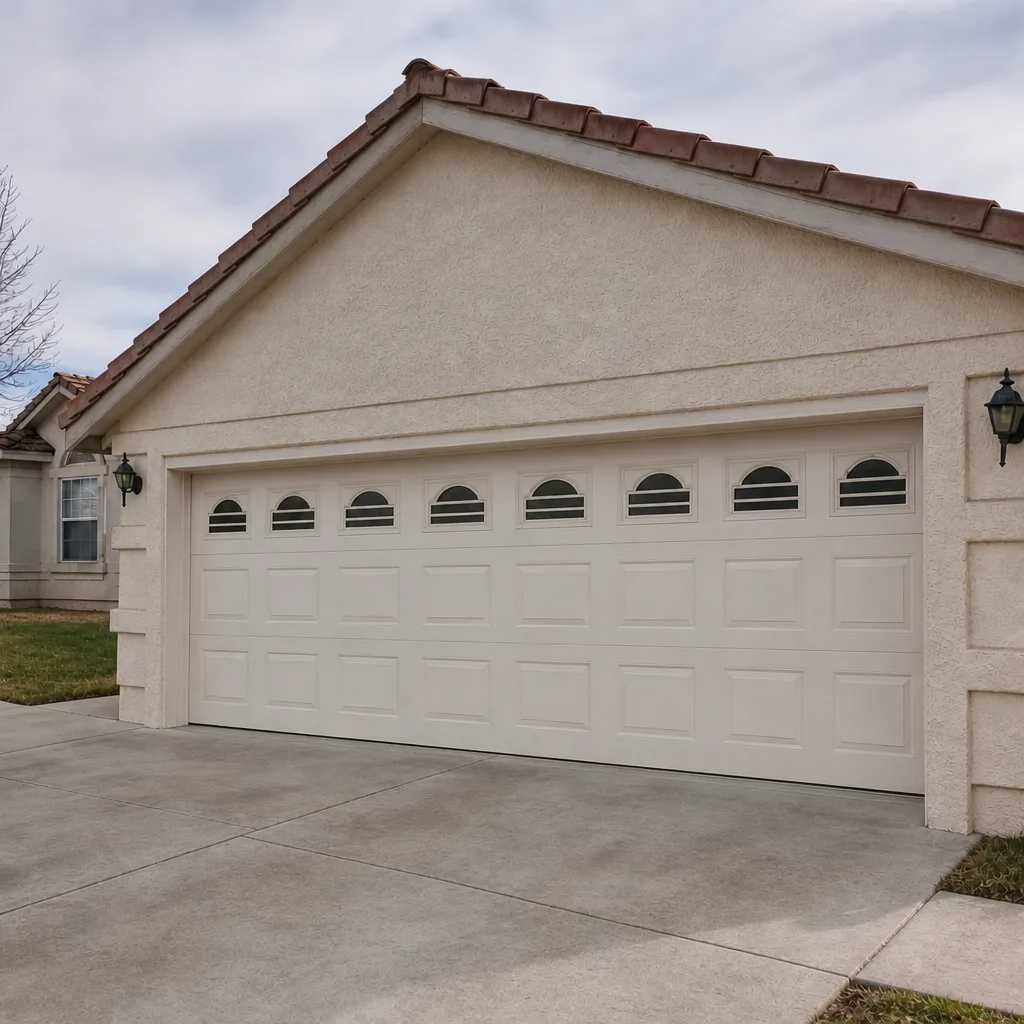
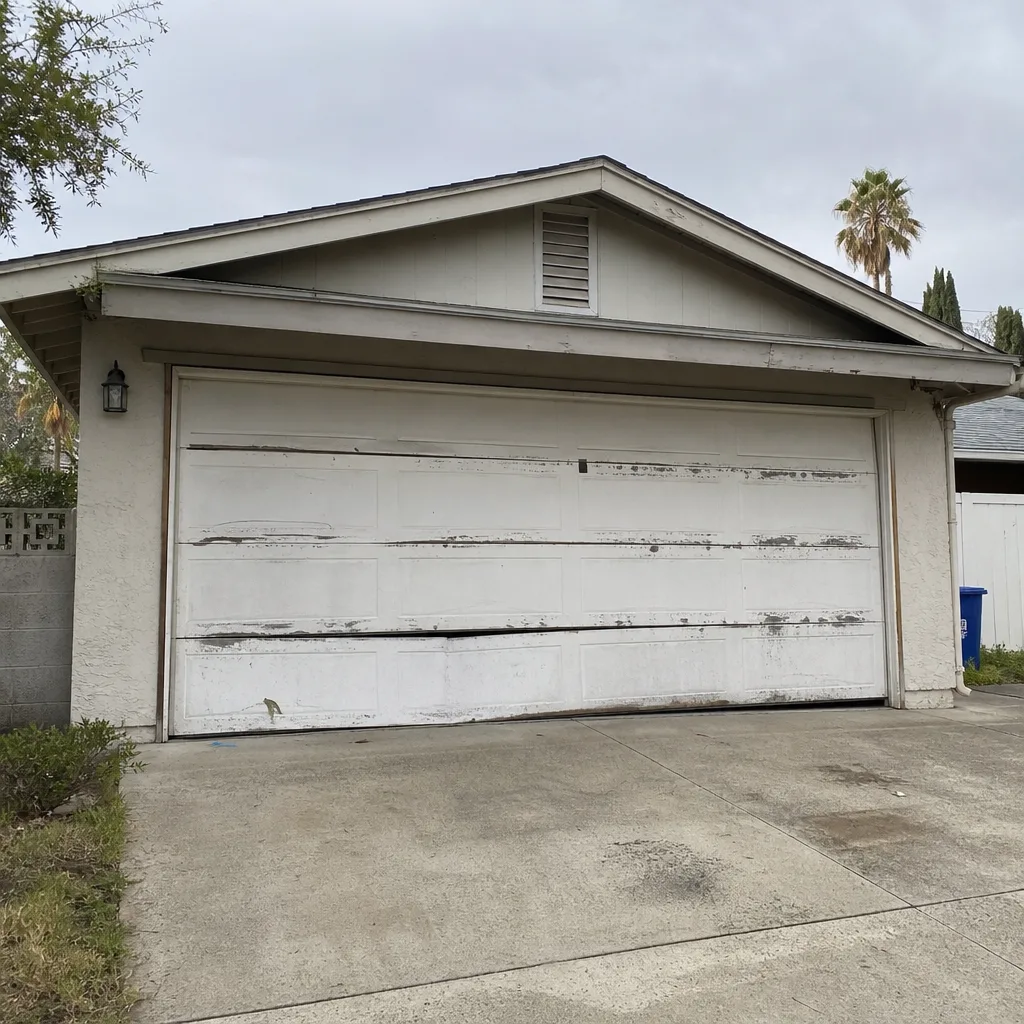
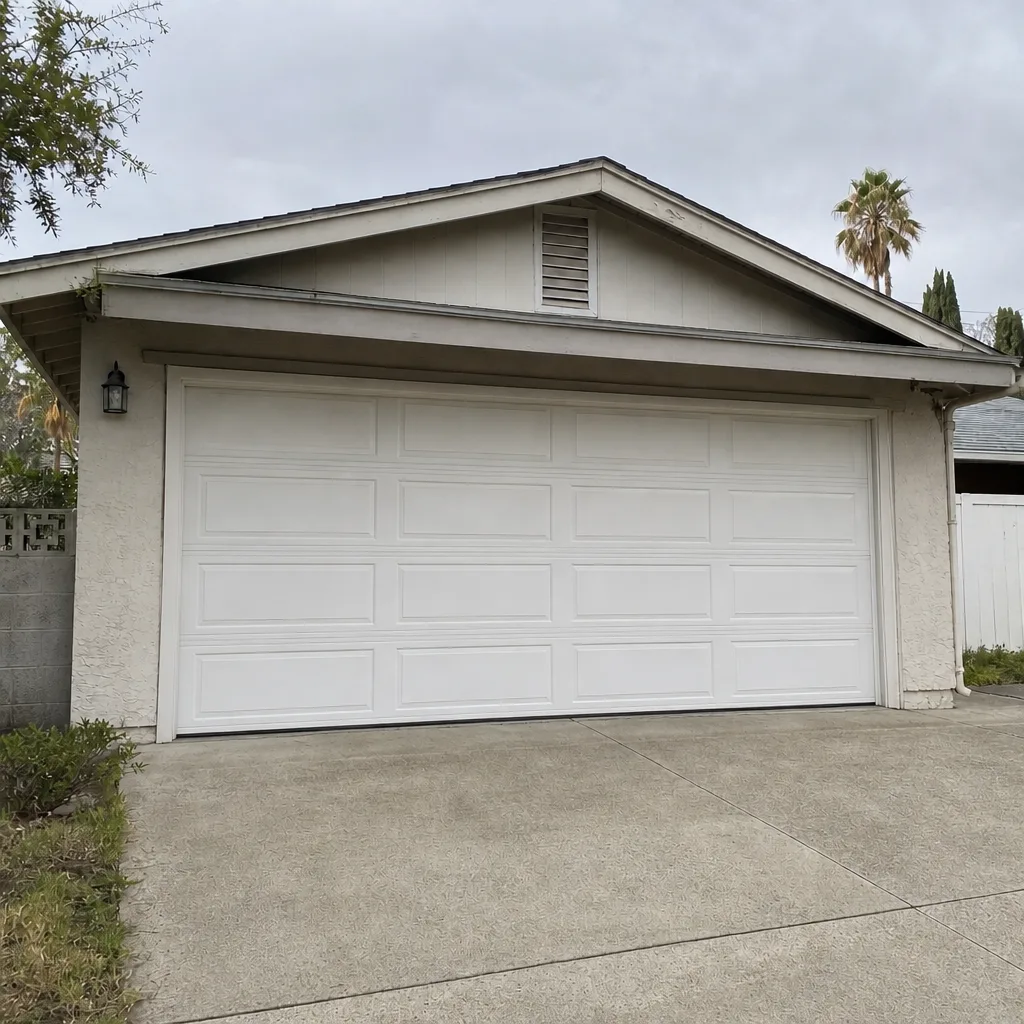
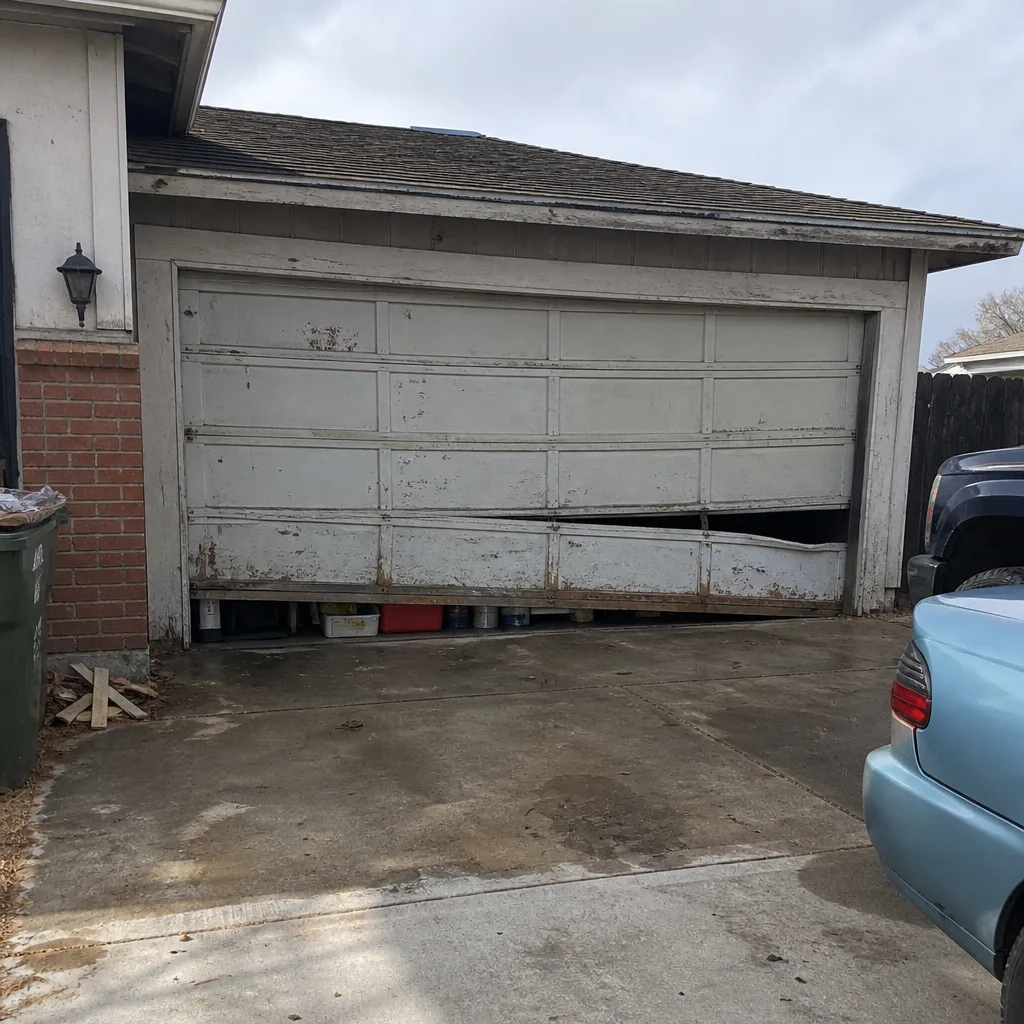
See the difference
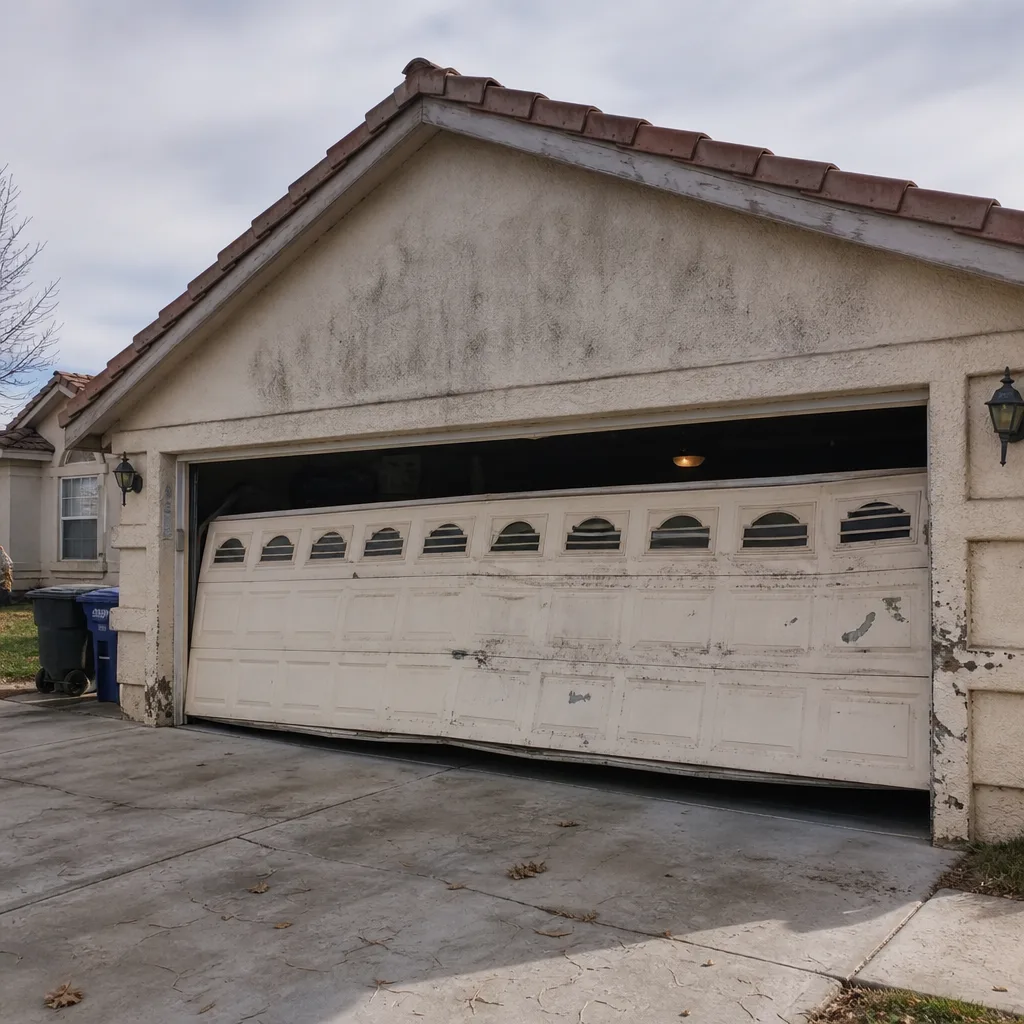 Before
 After
 Before
 After
 Before
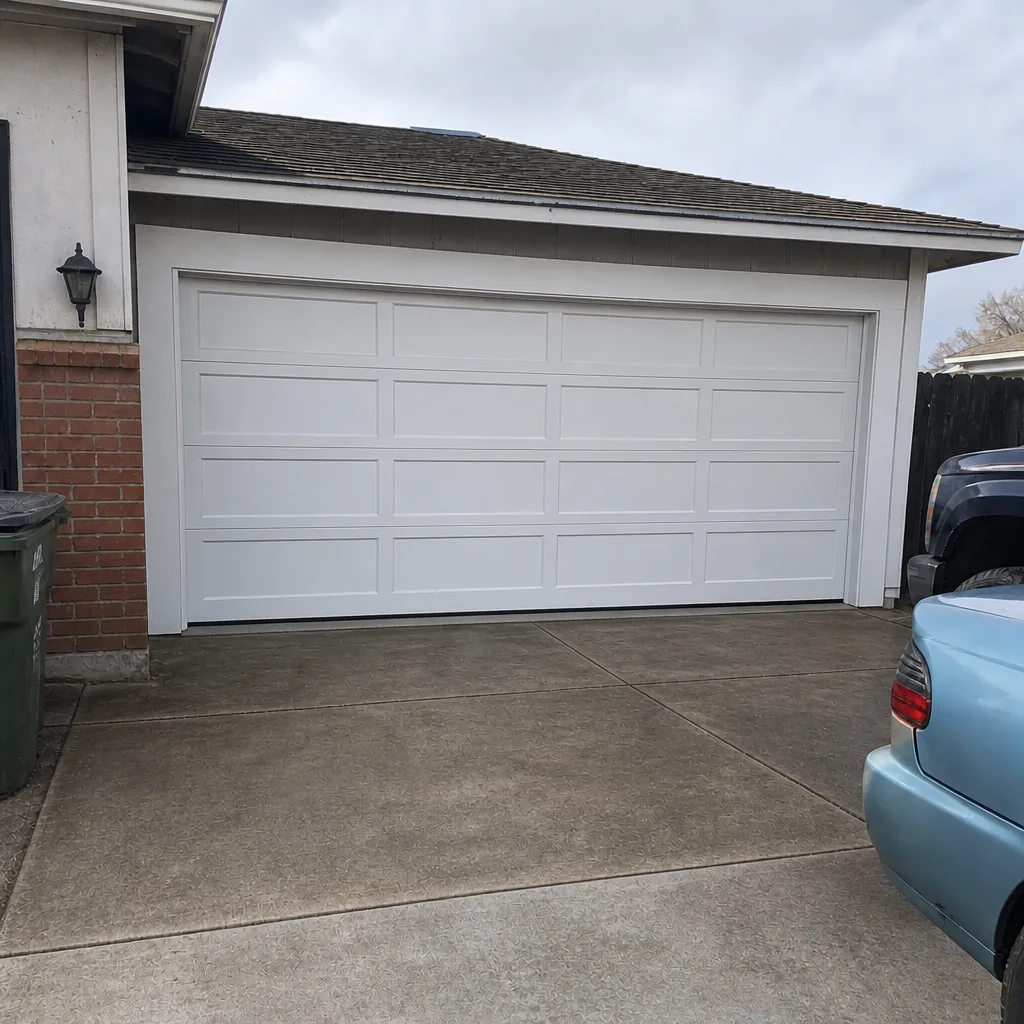 After
When to Call a Professional
Call a professional for anything involving springs, cables, or the opener’s internal electronics. Also call if the door is off its tracks, if the balance test fails, if a roller has come out, or if the door reverses for no clear reason. Any situation where the door feels heavier than usual, moves unevenly, or makes a new and repeated sound is worth a professional look rather than a DIY attempt.
Belmont Garage Door Service offers free estimates in Paradise, and we can assess the door and opener in one visit. Our technicians have up to 8 years of experience and work on the brands most Paradise homes already have. Call (844) 665-0023. We answer 24/7. Fast dispatch from 7am to 7pm, Sunday through Friday. Whether the checklist turned up a problem or you’d rather skip the steps and let us handle it, we’re glad to take a look.
Frequently Asked Questions
Twice a year is typical, with one pass in late spring before peak heat and one in the cooler months. In our heat, a single summer pass isn’t enough because lubricant thins and runs off. If the door gets heavy use, add an extra check mid-summer.
A heavy-grade white lithium grease for hinges and rollers, and a silicone spray for tracks and weatherstripping. Avoid light household oils, which thin out above 110°F. Never mix products on the same part, since the residue turns gummy and attracts dust.
Close the door and look for daylight underneath, then try the paper test: lay paper on the floor and close the door on it. If the paper pulls out with no resistance, the seal has lost contact. Check both faces of the seal for cracks and flat spots after any windy day in Paradise.
Yes, but only visually and without touching the hardware. Look for kinks, fraying near the drum, or any slack when the door is closed. If you see any of those signs, stop using the door and call a professional. Garage door cables are under extreme tension and can injure you if handled.
Stand in front of the door and sight down each track. Any visible tilt means something has shifted. Also look for rubbing marks on the tracks and for panels that no longer line up at the joints. These signs often show up after a full summer of heat expansion and contraction.
Once a year in the cooler months is a good baseline. Schedule sooner if the door feels heavy, runs unevenly, reverses for no clear reason, or has visual damage to the panels or tracks. A free estimate is the easy way to find out whether the checklist turned up anything serious.
The Bottom Line
Garage door maintenance in Paradise works best when it follows the actual climate rather than a generic four-season calendar. Lubricate before the heat, not during it. Test the bottom seal after each dust event. Do the cable check by eye only. Watch the panels and tracks for the small warps and drifts that grow into real failures through the summer. That routine catches most of what goes wrong before the door strands you. If the checklist turns up something you’d rather not tackle, or if it’s time for a professional look, give us a call at (844) 665-0023 for a free estimate. We can assess the whole door and opener in one visit. Explore more at Belmont Garage Door Service or learn about our work in Paradise.
Written by the team at Belmont Garage Door Service.