
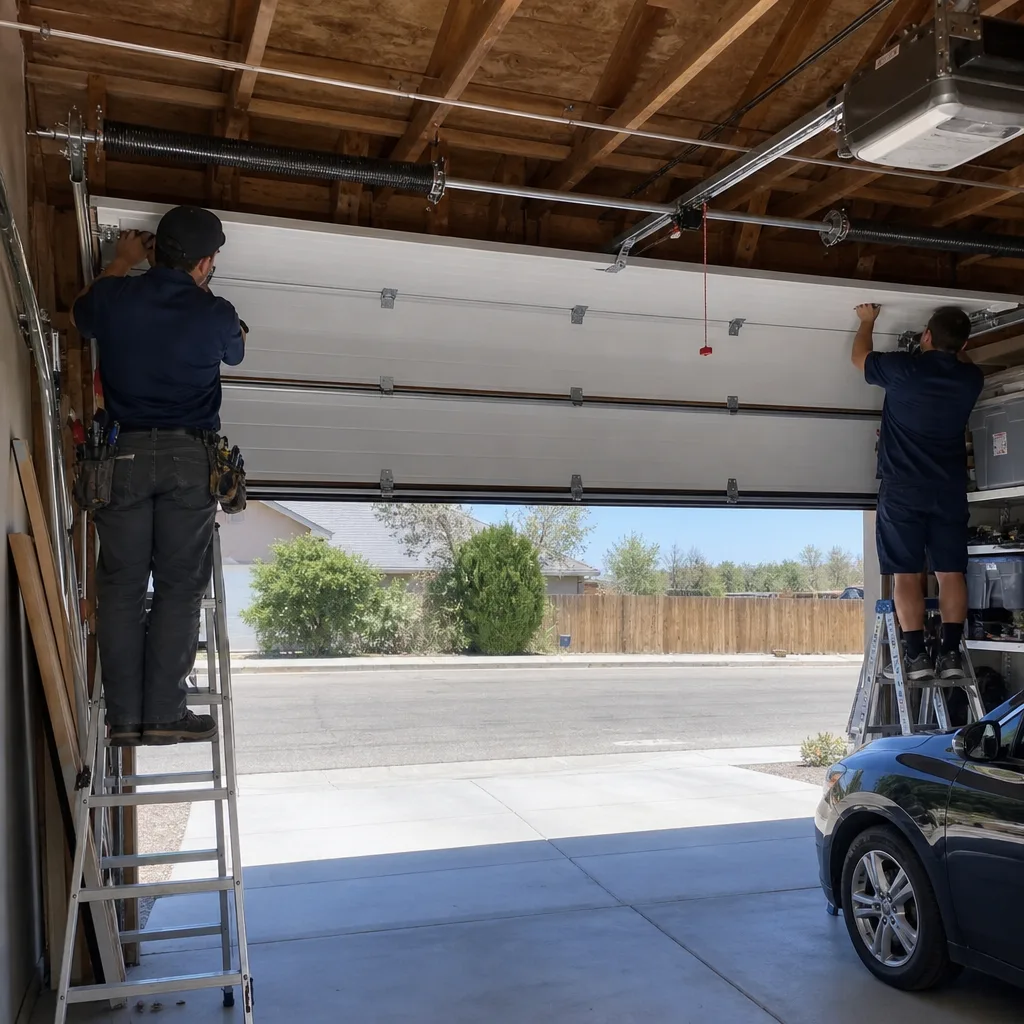
Last updated November 16, 2026
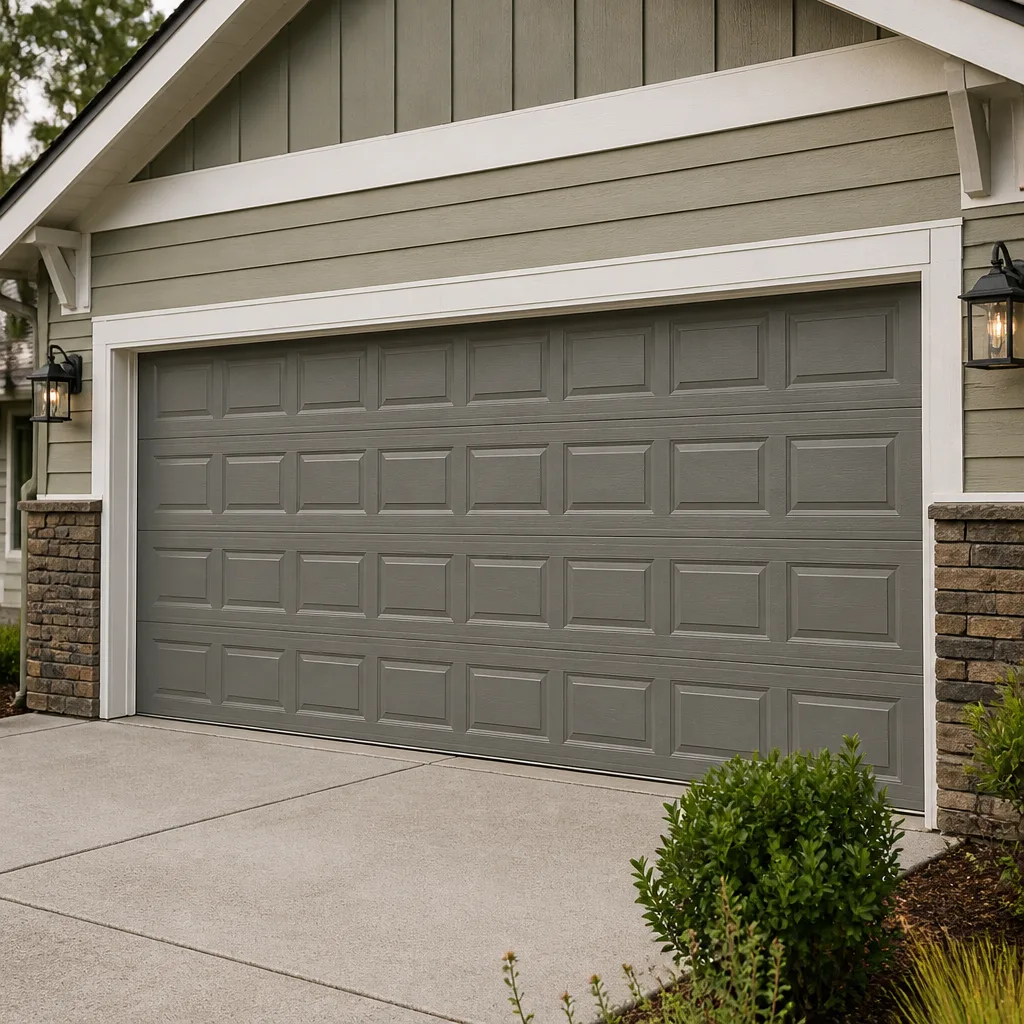 Raised-panel steel
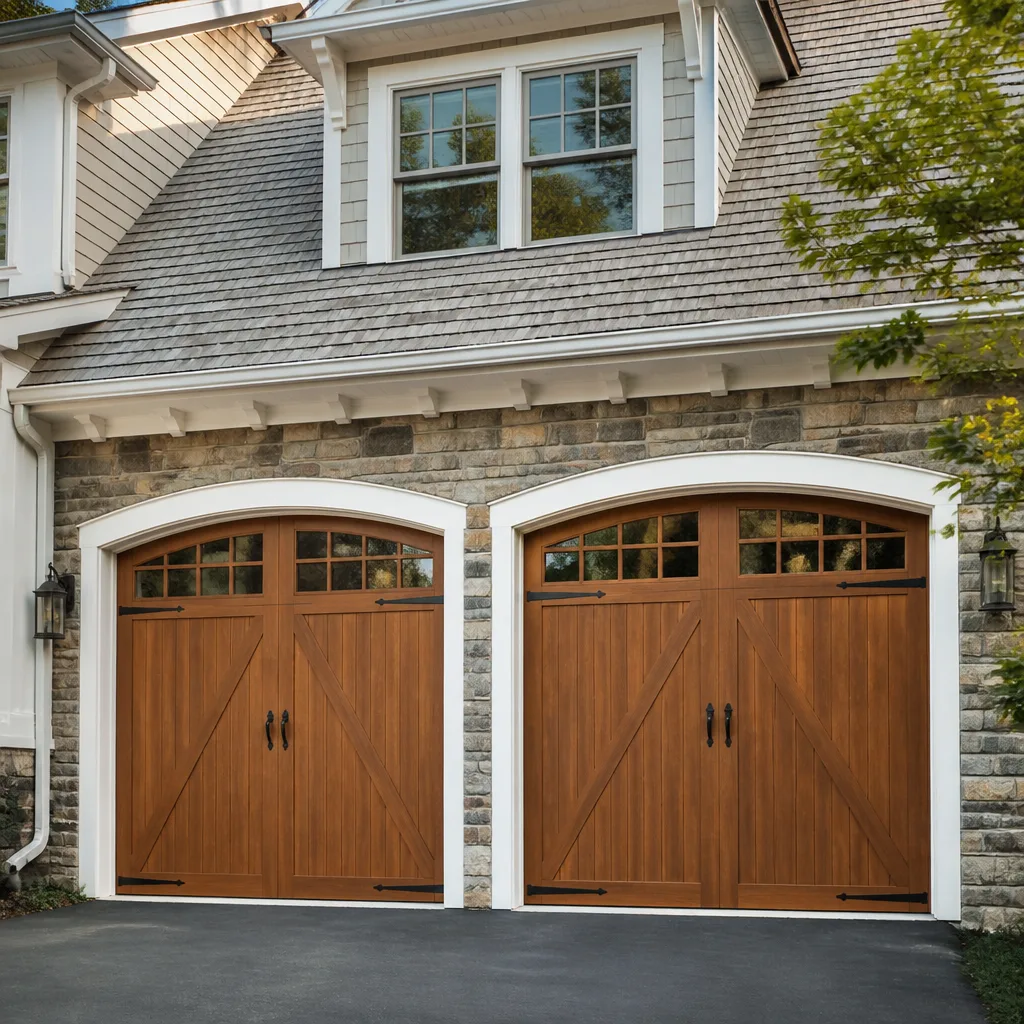 Carriage house
 Modern flush
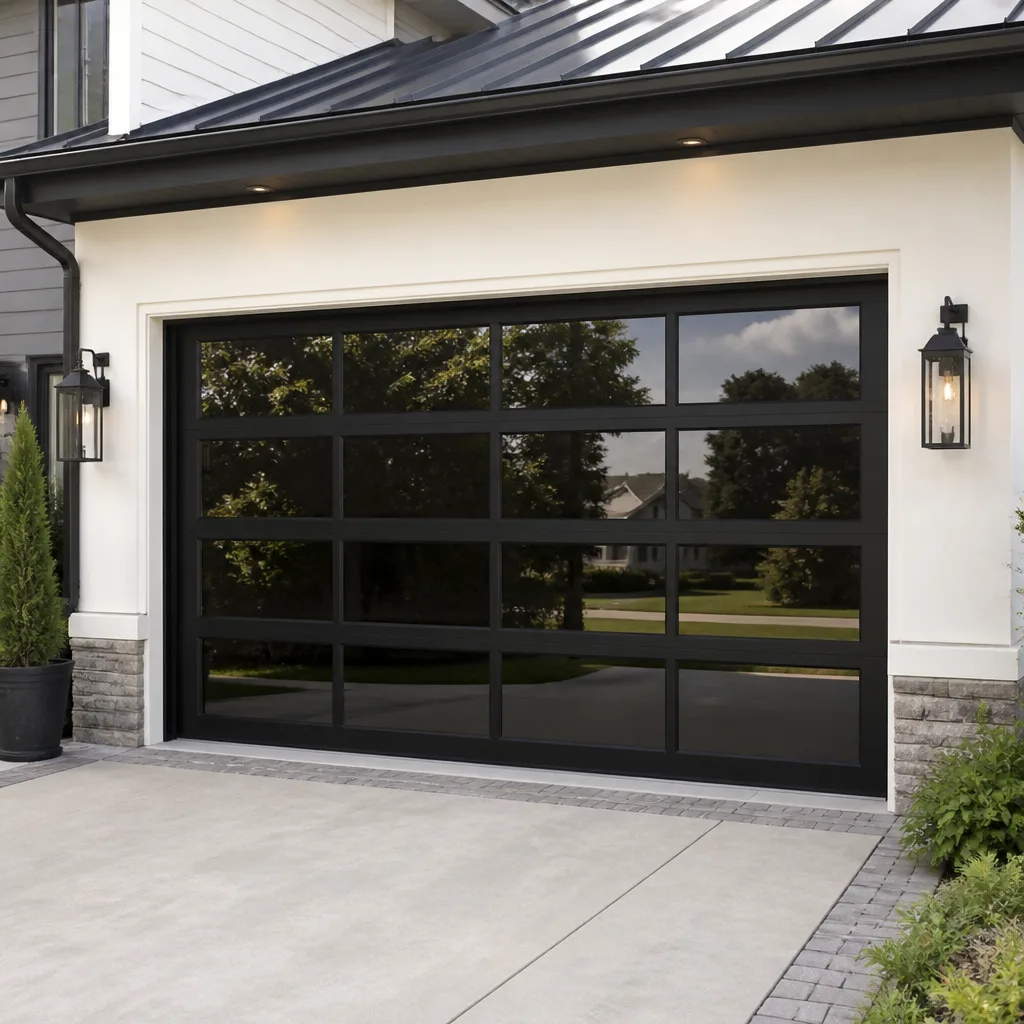 Full-view glass
 LiftMaster openers
 Chamberlain openers
Full 25-point door and opener safety check with every visit - springs, cables, rollers, tracks, and your LiftMaster or Chamberlain opener included
You get a price before we start. It does not change when the pro arrives.
Get your free estimateDIY vs Professional Garage Door: The Paradise Homeowner’s Decision Guide
Most homeowners who get hurt working on a garage door didn’t think they were taking a risk. They watched a video, bought a winding bar, and figured the job couldn’t be harder than hanging a shelf. The problem is that torsion springs store enough energy to send that winding bar through the drywall or into a person, and no tutorial conveys that feeling until the tension is already on. What follows is a task-by-task split of what you can safely handle yourself and what you shouldn’t touch, written for Paradise homes that face heat most of the year and the everyday wear that comes with it.
Quick Answer
You can safely handle sensor alignment, lubrication, remote programming, and minor panel work yourself. Leave torsion spring replacement, cable work, and anything involving the counterbalance system to a trained technician. The deciding factor isn’t how handy you are. It’s whether the task involves stored mechanical energy that can injure you if the load slips.
Styles & brands we work with
- Raised-panel steel
- Carriage house
- Modern flush
- Full-view glass
- LiftMaster openers
- Chamberlain openers
Table of Contents
- The Task Split: What You Can Do Versus What You Can’t
- Why Torsion Springs Are Different From Every Other Repair
- The Real Tools for Spring Work and What They Cost You
- How Paradise Heat Changes the Timing of DIY Work
- What a Botched DIY Repair Costs to Fix
- The One Thing to Check Before You Call Anyone
- Knowing Your Hardware Before You Touch It
- Common Mistakes to Avoid
The Task Split: What You Can Do Versus What You Can’t
The garage door industry doesn’t have a single policy on DIY, but most professional associations draw the same line again and again: the counterbalance system is where homeowners should stop. Everything downstream of the springs is generally fair game if you’re careful. The distinction matters because most guides lump every garage door problem into one category, which leads to either unnecessary service calls or genuinely dangerous DIY attempts.
Here’s the split we use when we talk to homeowners in Paradise:
Safe for most homeowners:
- Safety sensor alignment and cleaning. The sensors near the floor of the garage door opening need to face each other, and a bumped sensor is one of the most common reasons a door reverses for no obvious reason.
- Lubrication of hinges, rollers, and tracks with a proper garage door lubricant.
- Remote programming and re-pairing, whether the opener is a Chamberlain, a Genie, or another brand.
- Replacing the opener’s battery, or resetting the opener after a power interruption.
- Pushing out a small dent in a metal bottom panel, if you can do it without flexing the panel’s frame.
- Replacing weatherstripping along the bottom of the door.
- Clearance checks: making sure the path of the door is clean, the manual release works, and nothing is stored within the swing of the tracks.
Not safe for DIY:
- Any work involving torsion springs, including adjusting tension.
- Any work involving the lift cables, which are under tension even when the door is down.
- Replacing or adjusting the center bearing plate, end plates, or drums.
- Realigning tracks that have bent from an impact, since the door’s weight and balance are involved.
- Replacing the opener arm or the reinforcement bracket that ties the opener to the door.
- Anything that requires the door to be held open in a partial position for access.
If the problem fits the first list, take your time and you’ll likely solve it cleanly. If it fits the second, the economics of doing it yourself rarely work out, and that’s before you factor in the injury risk. Our garage door repair work in Paradise is built around this split, which is why a lot of “repair” calls turn out to be jobs homeowners could have handled but couldn’t correctly diagnose.
Why Torsion Springs Are Different From Every Other Repair
A torsion spring holds the entire weight of the door in a coiled metal bar. When it’s wound tight, the shaft and spring together store enough energy to move a 150-pound door with one hand, which is exactly why the door feels light when you lift it. When a spring breaks, that energy releases in a fraction of a second. When you’re winding or unwinding a spring by hand, the same energy is in your winding bars, the shaft, and the cone that holds the spring in place on the shaft.
The reason professional associations exclude spring work from DIY guidance isn’t liability theater. It’s that the failure modes are bad. A bar that slips out of the winding cone while you’re holding it goes somewhere. It might hit drywall, it might hit a car, and it might hit you. The C-clamp or vise grip that holds the shaft in place while you work can slip if it isn’t seated properly. There’s no partial failure mode where a spring gently lets go. It either slips or it doesn’t.
There’s also a second hazard most videos understate: springs come in matched pairs, and they’re usually replaced together. If you replace one side and leave the other, the door carries an imbalance that wears the new spring faster and puts unusual load on the opener. In our experience, a door that got a single mismatched spring replacement is one of the most common repeat-repair situations we see, and the second visit costs more than the first one would have.
For all of these reasons, spring work is one of the few house repairs we’d tell a capable homeowner to leave alone even if they’ve done roof patching, plumbing, and electrical themselves.
The Real Tools for Spring Work and What They Cost You
The tool list for safe spring work is short and specialized, which is part of why the DIY math doesn’t work:
- Two winding bars. These are steel rods sized to the diameter of the winding cone. A pair costs a modest amount, but they must be the correct diameter and must be solid steel. Many cheap bars sold online are not rated for the torque they take.
- A sturdy step ladder tall enough to reach the springs at working height while both hands are free.
- Two locking pliers or C-clamps to hold the shaft in place while you change the spring.
- The correct replacement spring, matched to the door’s weight, number of cycles, and wire size. Getting the size wrong is the second most common failure after slipping.
- Gloves, eye protection, and a second person to hold the door if anything goes wrong, though the second person is also at risk.
Now compare that to the price of professional spring replacement. For most residential doors, a trained technician arrives with the right springs staged, sizes the door in minutes, and completes both springs in a single visit. The tool cost alone often approaches the labor price, and you still have the learning curve, the injury risk, and the disposal of the old springs. The professional cost isn’t expensive because we think springs are magic. It’s because the job requires the right tools, the right parts, and hands that have wound a spring before.
If the door is older and the springs have been replaced once already, the technician gets the bonus of inspecting the shaft, drums, and cables in the same visit. That single look often catches problems that are more expensive to fix once they fully fail.
How Paradise Heat Changes the Timing of DIY Work
Paradise summers make a difference in two ways. The first is obvious: working on a steel door in a closed or partially closed garage during peak heat is genuinely draining, and heat fatigue is the primary reason people make slips. The second is subtler: heat affects the door itself.
Metal expands when it’s hot. Tracks that are tight in the morning loosen slightly by afternoon. A door that closes cleanly at 10am might be misaligned by 3pm. If you’re tuning track alignment or sensor placement on a hot afternoon, you might be calibrating the door in one condition and finding it wrong the next morning. That’s one reason we suggest doing DIY adjustments early in the day, before the garage has absorbed the day’s heat. If the door will be in direct sun for most of the afternoon, close the garage door and let the garage cool before working on anything that requires precision.
Heat also accelerates wear. Rubber weatherstripping on the bottom of the door can harden and crack within a few seasons of Paradise sun. Garage door lubricant thins out in high heat, so a door that ran silently in January might start to rumble in July. That rumble is often the prompt for a homeowner to call a technician, and the fix is often a lubrication pass rather than any part replacement. Our technicians have up to 8 years of experience diagnosing exactly that kind of heat-related wear.
The practical upshot: schedule any DIY tune-up for early morning, don’t try to force a stuck door on a hot afternoon, and if the door is struggling in July, don’t assume parts are failing. Check the lubrication first.
What a Botched DIY Repair Costs to Fix
Here’s where the math on DIY gets uncomfortable. The most common botched repairs we see on residential garage doors in Paradise fall into a small set of failure patterns, and each one is a specific kind of expensive:
- A spring replaced on one side only. The door carries imbalance, the new spring works harder, and within a few months a second repair call is needed. That call usually includes replacing both springs (which is the right fix anyway), plus the cost of the first spring.
- A snapped cable from an attempted tension adjustment. A loose or improperly seated drum lets the cable jump, and the door drops or twists in the tracks. Now you’ve got bent tracks, possibly a cracked panel, and a cable repair all stacked on top of the original problem.
- A door forced open or closed with the manual release engaged but the opener still connected. The opener arm tangles the door, the top section gets pulled, and the repair becomes a full section and opener-arm job instead of a simple spring replacement.
- An opener installed without the correct reinforcement bracket. A heavier door needs a reinforced mounting point at the top section. A short DIY install can flex the top panel until it cracks, and a Clopay or Amarr panel replacement often costs more than the opener saving.
- Tracks bent from a backed-into door. Attempted home straightening of bent track rarely holds, and the attempted fix often damages the vertical track’s fasteners, requiring the track and the corresponding hinges to be replaced.
What all these share is this: the original job was cheaper than the repair of the repair. A standard spring replacement is priced per job by a written estimate, and the estimate is agreed to before any work starts. The botched version spirals into multiple services stacked on top of each other, and each has to be quoted on its own. That’s the trade homeowners are making when they take on a counterbalance job themselves.
A note on the “but my neighbor did it” story before we move on: for every successful DIY spring replacement there’s usually a matching story about a near miss. The fact that one went fine doesn’t change the failure math for the next one.
The One Thing to Check Before You Call Anyone
Whatever you do about the repair, there’s one diagnostic step that saves time and money no matter who ends up doing the work:
- Disconnect the opener from the door using the manual release cord.
- Lift the door by hand to the halfway point and let go.
- Watch what happens.
If the door stays roughly where you left it, the torsion springs are holding balance and the problem is likely in the opener or in the door’s hardware. If the door sinks to the floor, the springs aren’t holding their load and the counterbalance is the issue. If the door slams or falls, stop and don’t operate the door again.
That one-minute test tells the person on the phone whether they’re scheduling a spring job, an opener job, or a door adjustment. For our team, it means we show up with the right parts and can often finish in one visit. For a homeowner calling anyone else, it still gets a better guess at the estimate range over the phone. It also tells you when to call and how urgently: a door that slams on release is a same-day call, a door that just sticks a little can wait for a scheduled visit.
If the opener is the obvious problem (it hums and doesn’t move, or the lights flash and the door doesn’t budge), don’t force it. Our garage door opener repair team handles LiftMaster, Chamberlain, Genie, Craftsman, and the other opener brands common in Paradise homes, and the majority of failures are electronic or in the opener’s drive gear rather than the door itself.
Knowing Your Hardware Before You Touch It
Brand matters less than people think for basic repairs, but it matters a lot for anything involving replacement parts. A door that was installed with a Clopay panel doesn’t take a generic section, and an opener’s limit settings are different between a Chamberlain and a Raynor. If you do any DIY repair on a door you didn’t install, find the label on the door’s hinge stile or the opener’s motor head before buying parts.
We work on eight major brands of garage door and opener: LiftMaster, Chamberlain, Genie, Clopay, Amarr, Wayne Dalton, Craftsman, and Raynor. That range covers the majority of the residential doors we see in Paradise, from older Craftsman belt drives to newer Chamberlain smart openers and Amarr and Clopay steel panel doors.
Why this matters for a DIY decision: brand-specific part numbers and opener manuals are widely available, but tracking them down takes time. If the door was installed before the current homeowner moved in, the brand and model might not be obvious from the outside. A quick call to any garage door company with a photo usually identifies the brand in minutes. If we know the brand we can point to the correct manual, which is often all a homeowner needs for sensor and programming tasks.
Common Mistakes to Avoid
- Trying to adjust spring tension yourself. Spring tension work is the one job the professional trade universally asks homeowners to skip. Even if you have the right winding bars, one slip in the winding cone can send a bar across the garage at head height.
- Replacing a single spring instead of the matched pair. Springs are matched to the door’s weight and wear out in parallel. Replacing only one leaves the door imbalanced, wears the new spring faster, and is usually more expensive to fix the second time.
- Lubricating the tracks. Tracks should stay dry so the rollers can roll freely. Lubricant in the tracks attracts dust, and dust in the tracks is one of the most common reasons a door starts grinding. Lubricate the hinges, rollers, and bearings instead.
- Working on the door in Paradise’s afternoon heat. Heat makes metal expand and people tire faster. Do any adjustment work in the early morning, and don’t try to force a door that’s fighting you at 3pm in July.
- Buying parts off a photo alone. Panel profiles, spring sizes, and opener brackets aren’t generic. A part that “looks right” often doesn’t fit, and returning a spring after it’s been installed isn’t an option.
- Ignoring the opener’s manual. Most opener brands (Chamberlain, Genie, Craftsman) include a troubleshooting section that resolves the problem in under a minute. Read it before assuming the opener is broken.
- Disconnecting the opener’s safety release and not reconnecting it. The manual release is a safety device. If the door is left in manual mode after a DIY repair, the next person who presses the opener button learns the lesson the hard way.
See the difference
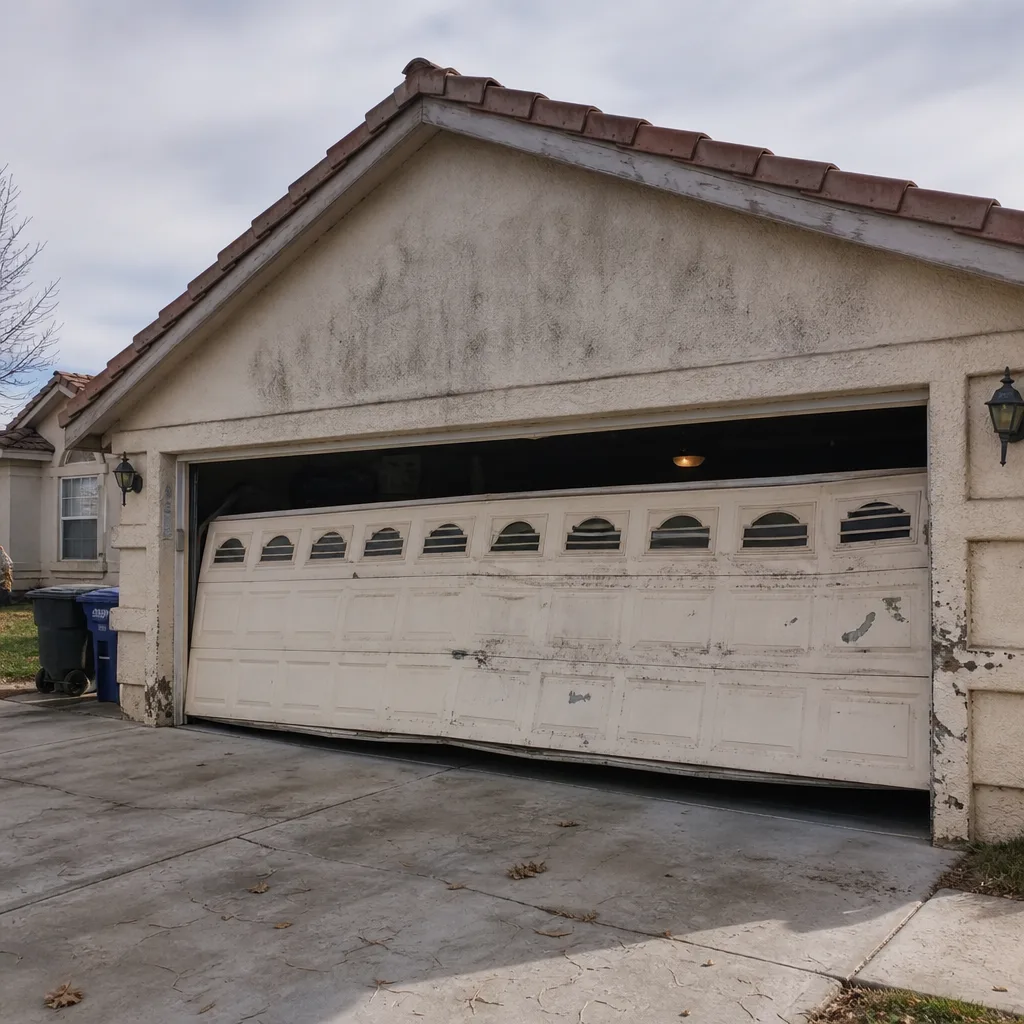 Before
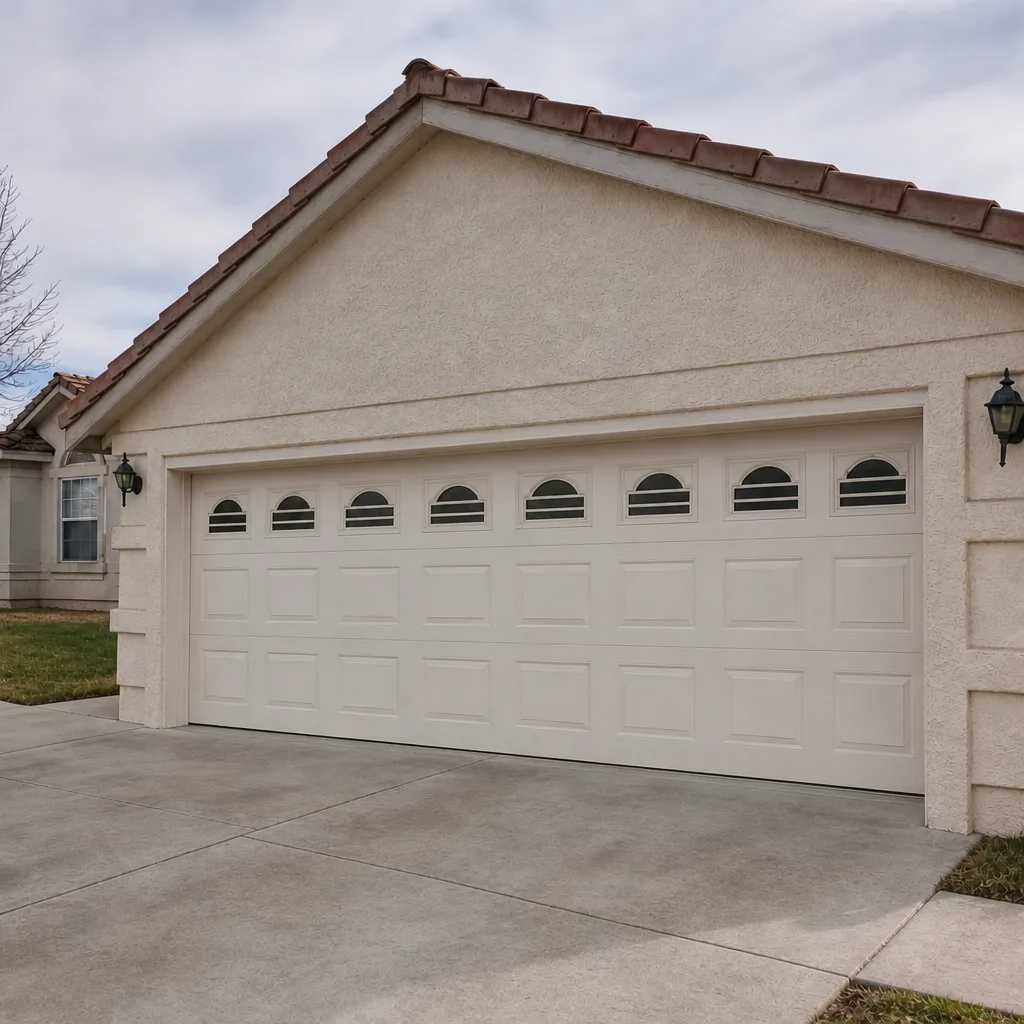 After
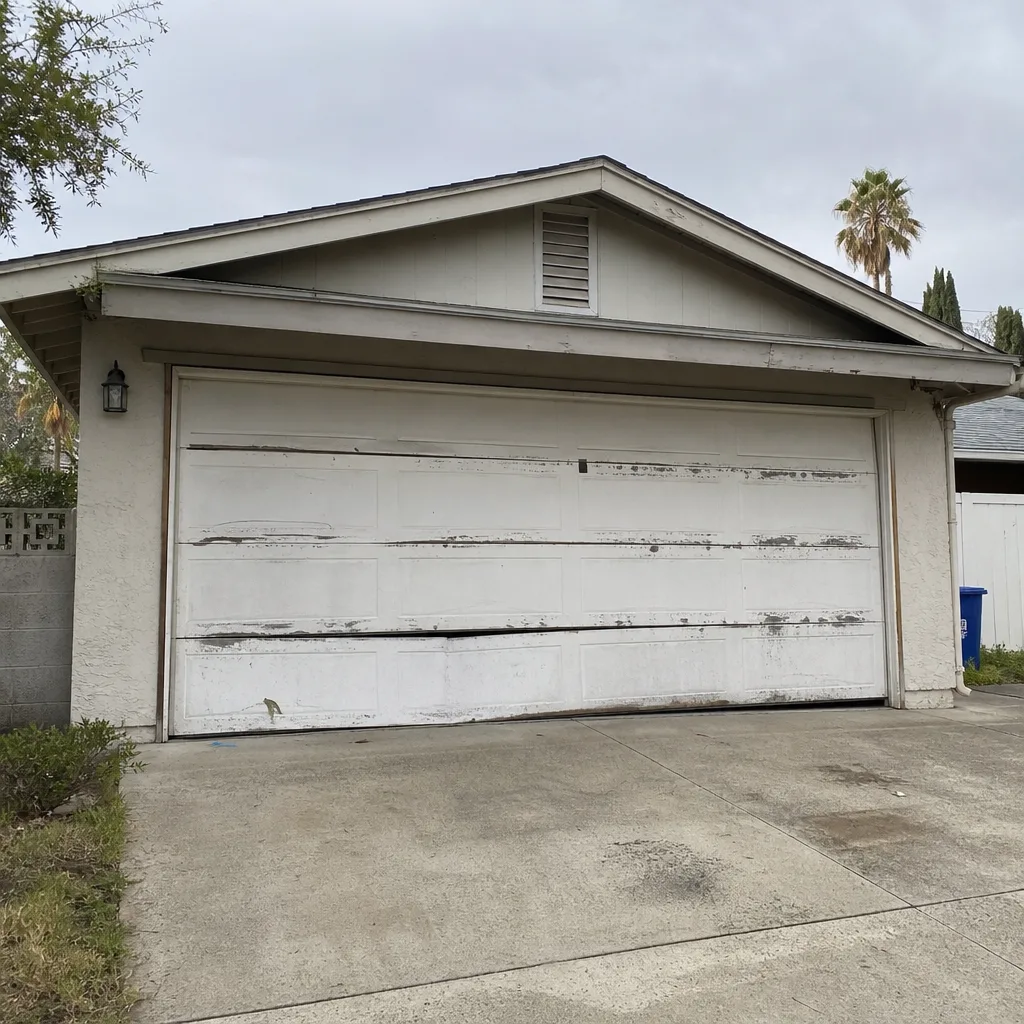 Before
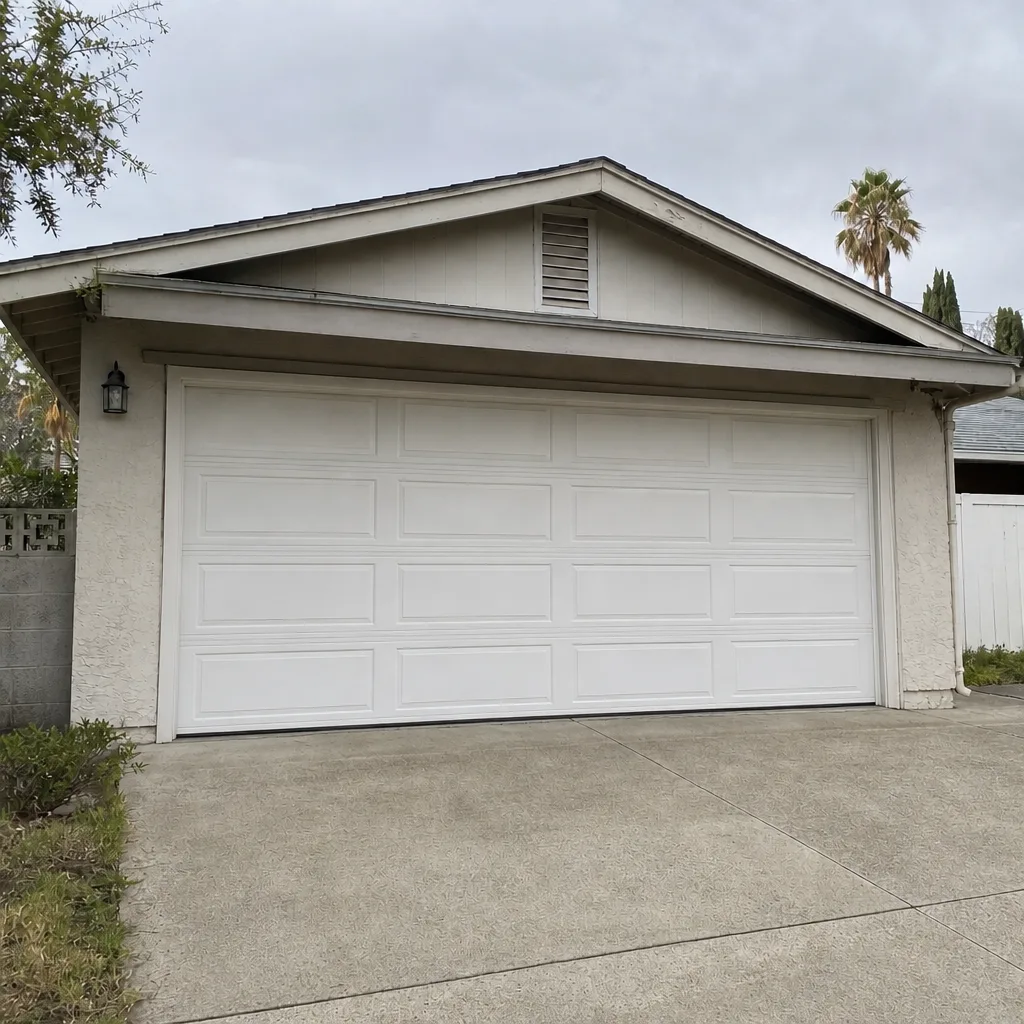 After
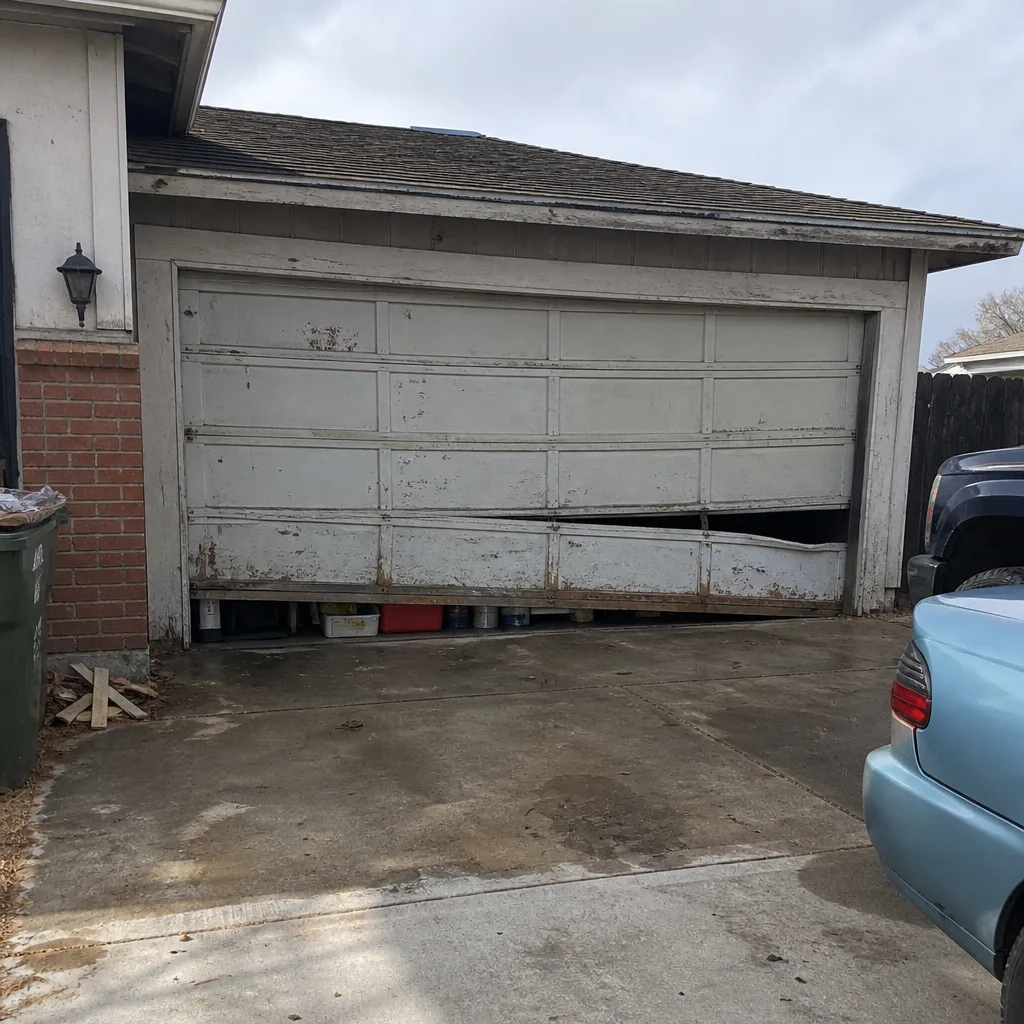 Before
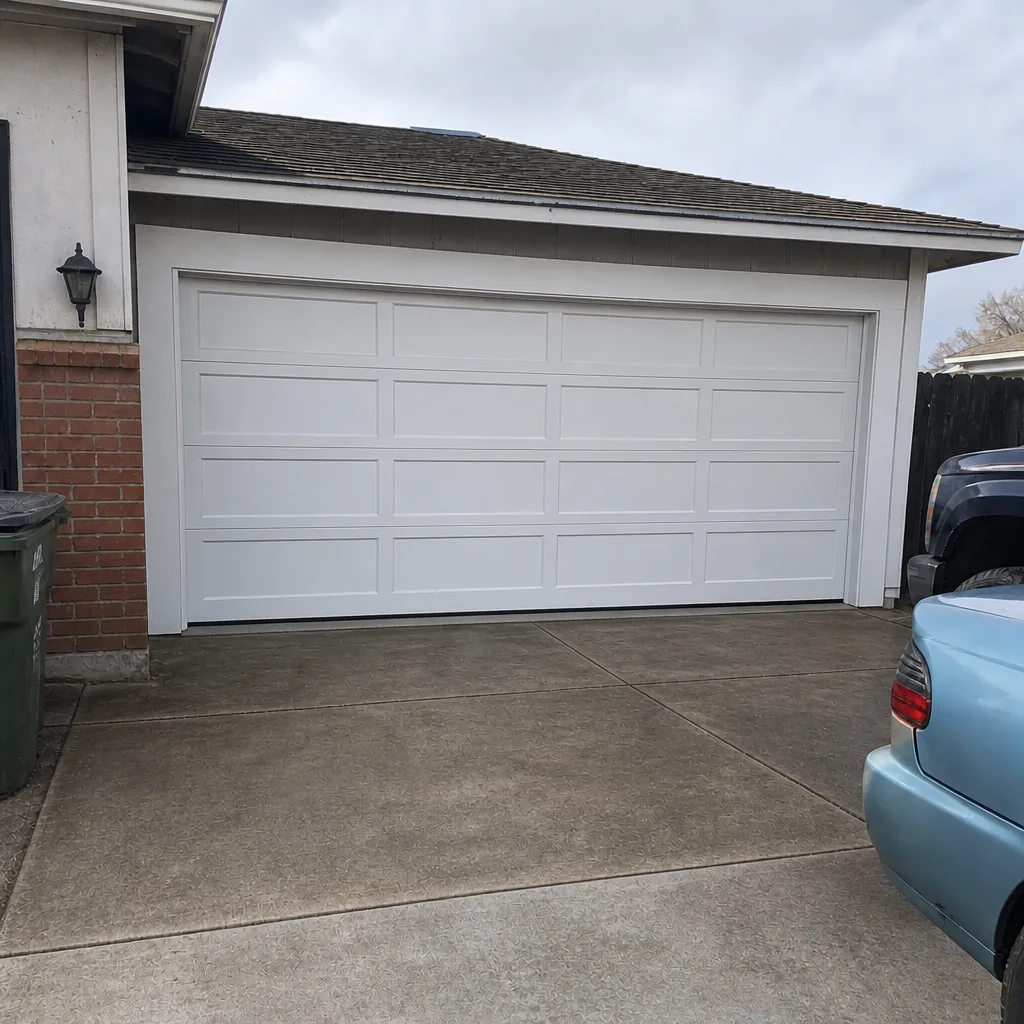 After
When to Call a Professional
Call a professional for anything involving the springs, cables, drums, bearings, or the door’s overall balance. Also call if the door has been hit by a car, if the tracks are bent, if the opener has failed, or if the door has slammed without warning. Those situations put stored energy and heavy hardware in motion, and the risk of a follow-on failure is high. Same-day repair is often possible for spring and opener jobs in Paradise, and the price is quoted before the work starts, so you know what you’re agreeing to. Call (844) 665-0023 and we’ll talk through what the door is doing, what the likely fix is, and what a written estimate would look like. For the jobs on the DIY-safe list, we’ll say so. Belmont Garage Door Service offers free estimates in Paradise.
Frequently Asked Questions
You shouldn’t. Torsion springs store the full weight of the door and release it in an instant when they fail or slip during winding. Even experienced homeowners with the right tools are exposed to an injury risk that professional associations consistently say is not worth taking. A trained technician carries the correct springs and winding bars and can usually finish the job in a single visit. If your door needs spring work in Paradise, call (844) 665-0023 for a free estimate, quoted before any work begins.
They aren’t more dangerous because of heat, but they wear out in a wider range of real-world conditions. Paradise heat is hard on the rubber parts around the springs (the bearings and the weather seal) and it thins the lubricant that keeps the shaft turning smoothly. That wear is usually the reason a spring breaks rather than the heat itself. If your door has been running louder than usual in summer, that’s the cue to have it looked at before a spring fails. Call (844) 665-0023 to schedule an inspection.
Pricing is set per job by a written estimate, so we don’t quote a single figure over the phone before seeing the door. What we can say is that most spring replacements, opener repairs, and alignment jobs get a free on-site estimate and a written price before any work starts. That’s the number you agree to. Call (844) 665-0023 and we’ll talk through what the door is doing and what the estimate range is likely to be.
No, if the written estimate is in place before work starts. Our estimate is agreed to before we touch the door. If we find something additional during the repair (a bracket that’s failing, a drum showing wear) we stop and quote the added work separately before doing it. The written estimate is the price. Call (844) 665-0023 for a free estimate on any Paradise garage door job.
Often yes, especially for spring replacements and opener failures. We answer 24/7 and dispatch technicians from 7am to 7pm Sunday through Friday. A call outside dispatch hours gets booked into the next opening, not answered by a callback service. Call (844) 665-0023 and we’ll tell you the soonest we can get to your door.
Do the manual release test. Pull the release cord, lift the door halfway, and let go. If the door stays up, the springs are holding balance and the issue is likely the opener. If the door sinks to the floor, the counterbalance needs attention. A door that slams should not be operated again. That test takes about a minute and often tells us over the phone what parts to bring. Call (844) 665-0023 once you know which of those it is.
Yes. Our technicians are licensed and insured, and the written estimate you receive before work starts is the price you pay. The technicians we dispatch work on the eight major residential brands we cover, and our focus is garage doors only, not a side service. Call (844) 665-0023 for a free estimate in Paradise.
The Bottom Line
The DIY-vs-pro question on a garage door comes down to one filter: does the task involve the door’s counterbalance? Sensor alignment, lubrication, weatherstripping, remote programming, and small panel dents are safe for most homeowners. Springs, cables, drums, tracks, and opener brackets are not, and the math on professional help generally works out even before you factor in the risk. Paradise heat changes the timing (do precision work early and check lubrication in summer), but not the split. When the door needs a trained hand, call (844) 665-0023. Our technicians have up to 8 years of experience covering repair, opener repair, and full installation across the brands most Paradise homes already use. We answer 24/7, and dispatch runs 7am to 7pm Sunday through Friday. Your free estimate is quoted and agreed to before any work begins.
Written by the team at Belmont Garage Door Service.