
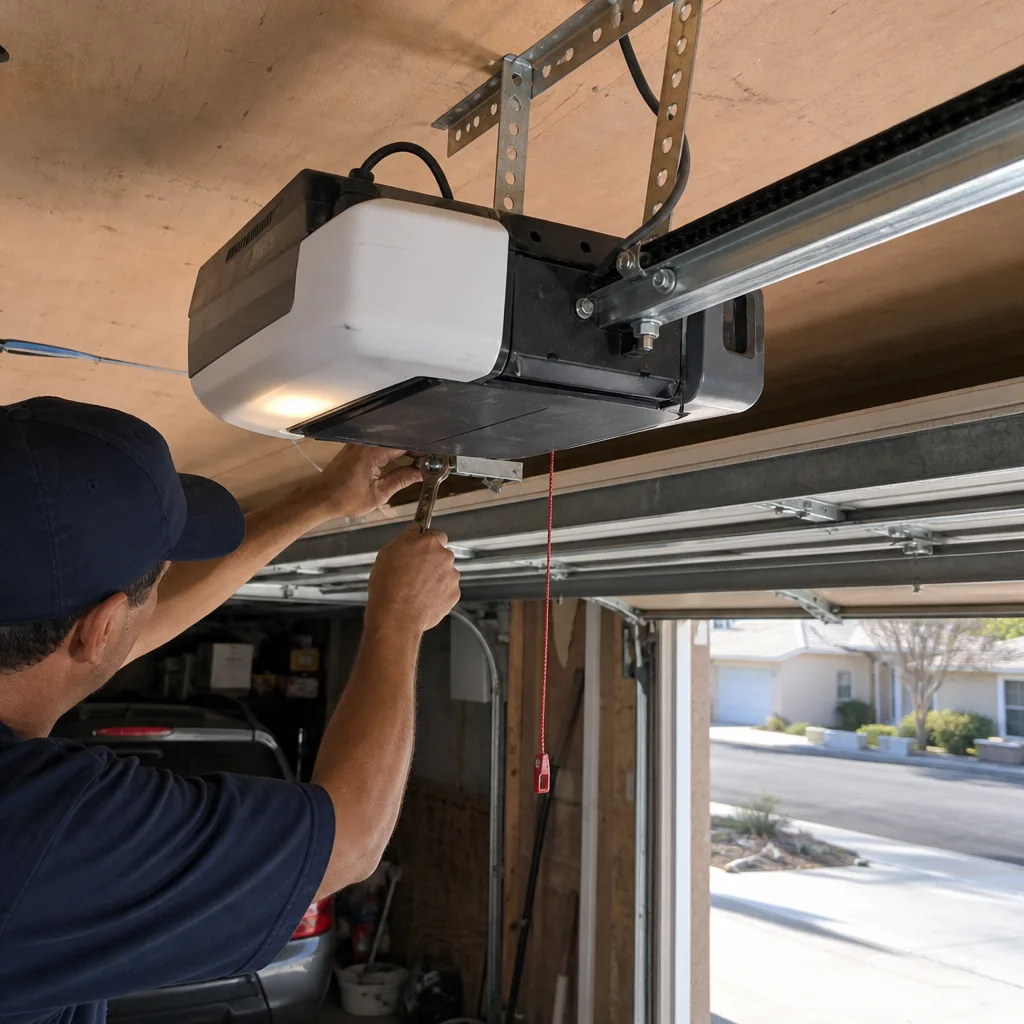
Last updated November 16, 2026
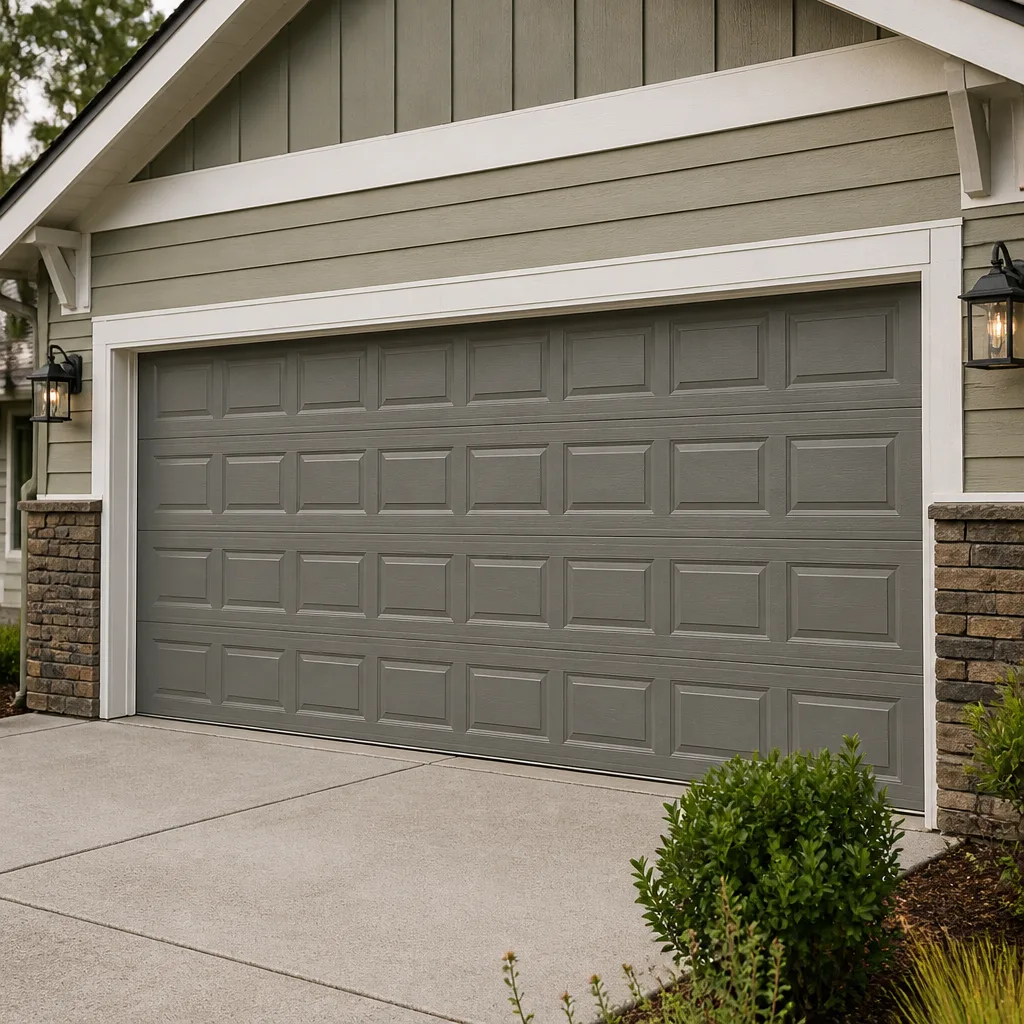 Raised-panel steel
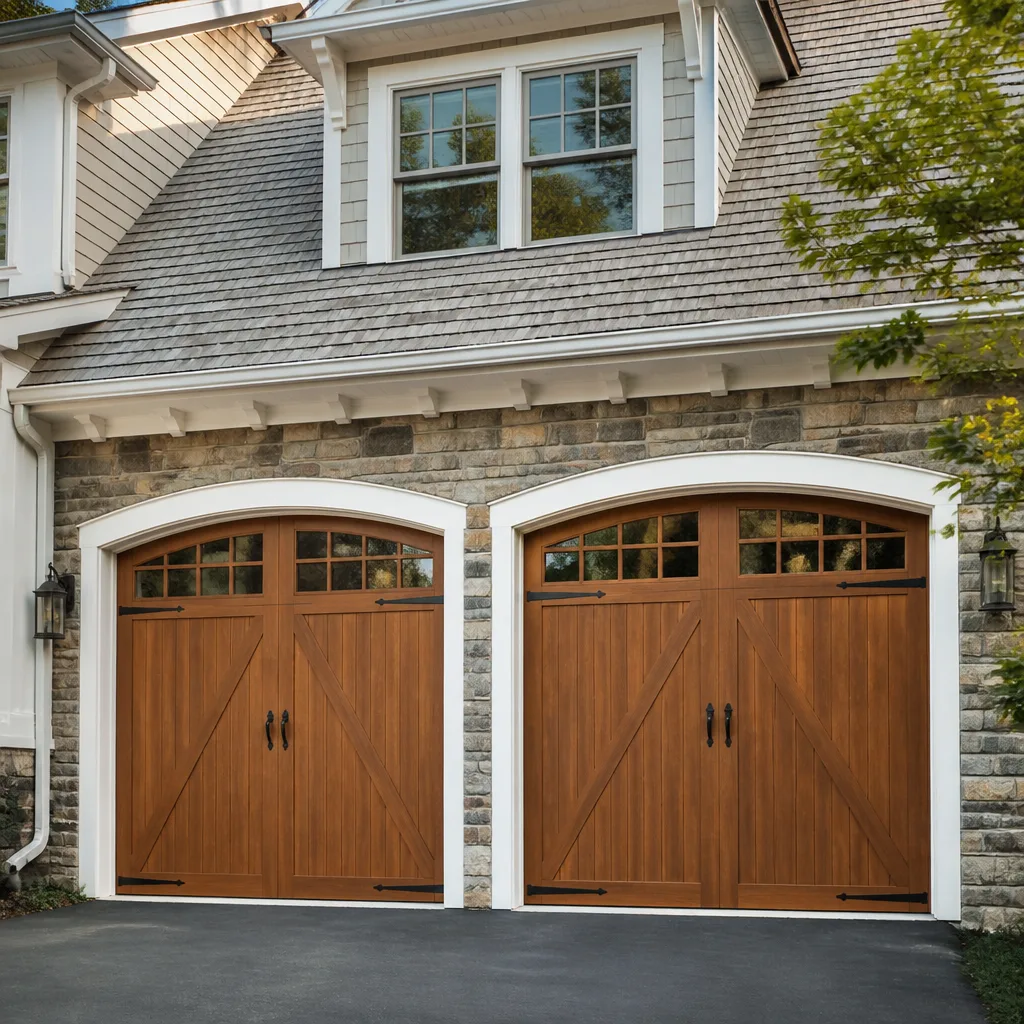 Carriage house
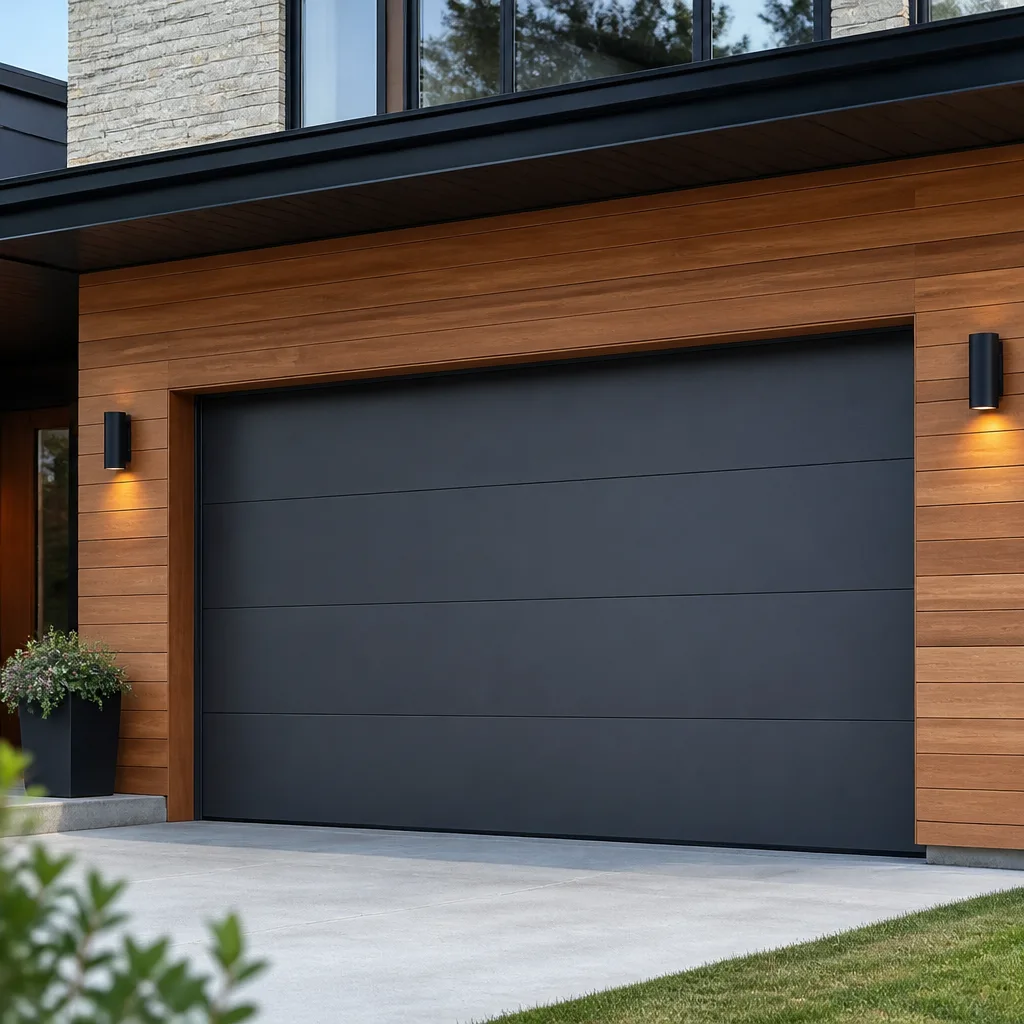 Modern flush
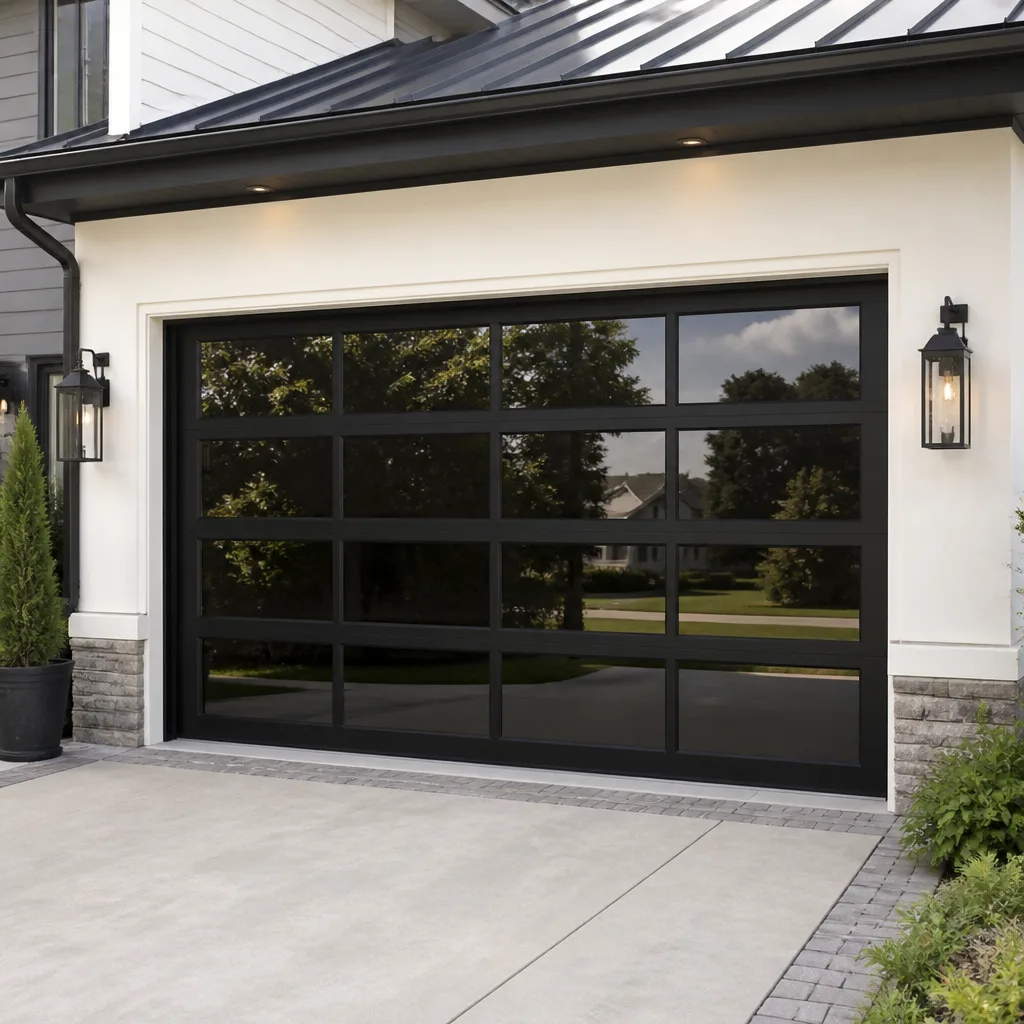 Full-view glass
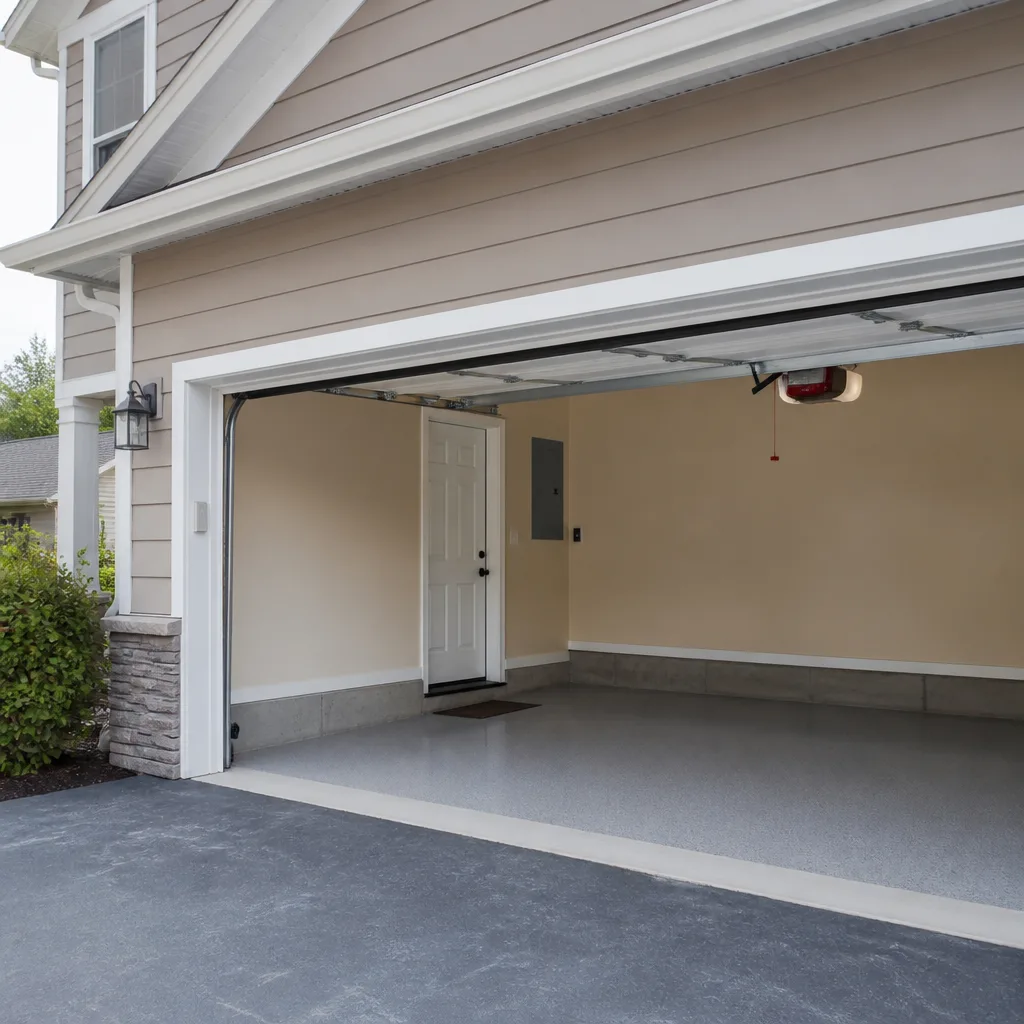 LiftMaster openers
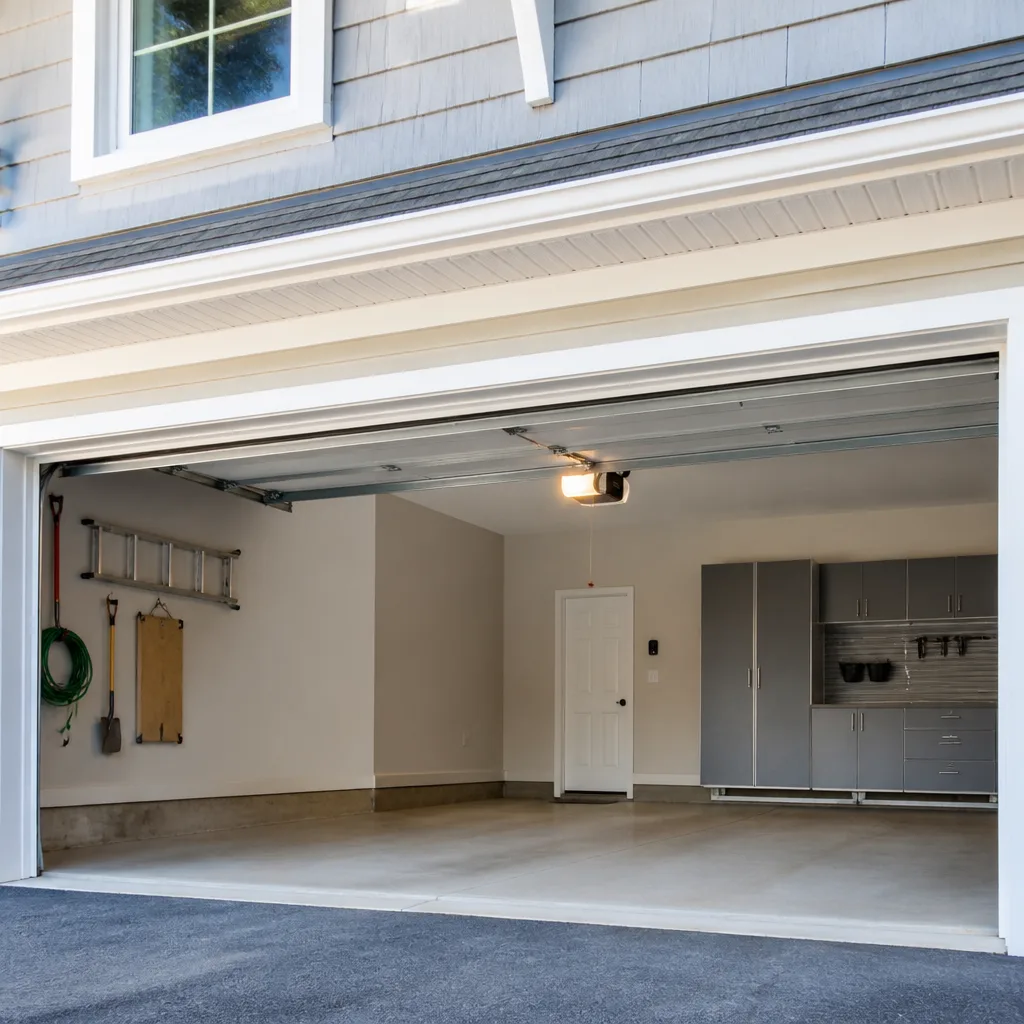 Chamberlain openers
Full 25-point door and opener safety check with every visit - springs, cables, rollers, tracks, and your LiftMaster or Chamberlain opener included
You get a price before we start. It does not change when the pro arrives.
Get your free estimateThe Complete Guide to Garage Doors in Paradise
Most garage door advice you’ll read online was written for a generic American suburb with four seasons, moderate humidity, and no design review committee. Paradise doesn’t work that way. This corner of Nevada averages 294 sunny days a year, bakes through a long hot season, and gets scoured by wind-blown desert dust that finds every gap in a door. Add a dense layer of homeowner association rules and you have a place where the standard playbook quietly fails. This guide covers what actually holds up on a Paradise street: which materials survive the sun, which styles your HOA will approve, why a like-for-like swap often repeats the same mistake, and when a repair beats a replacement.
Quick Answer
A garage door in Paradise should be chosen for UV resistance, dust sealing, and HOA compliance before style or price. Steel doors with a factory-applied finish and a properly rated insulation layer hold up better than wood in this sun, and the bottom seal and track selection matter as much as the panel itself. Repair is usually the right first move unless the door is structurally failing or your HOA won’t allow the style you have.
Styles & brands we work with
- Raised-panel steel
- Carriage house
- Modern flush
- Full-view glass
- LiftMaster openers
- Chamberlain openers
Table of Contents
- Why the Paradise Climate Changes Every Garage Door Decision
- Choosing a Door Material for 294 Sunny Days a Year
- HOA Rules in Paradise and the Styles They Rule Out
- Dust, Wind Events, and the Parts That Take the Hit
- Replacement vs. Like-for-Like Swap: Why They Aren’t the Same
- The Hardware Specs That Matter Here (and the Ones That Don’t)
- Openers: Matching the Unit to the Door and the Heat
- A Seasonal Maintenance Routine for Paradise
Why the Paradise Climate Changes Every Garage Door Decision
Manufacturers publish climate ratings in broad bands, and those bands hide the detail that matters most in Paradise. A door rated for “hot climate” may still be assessed against a place with more cloud cover, lower UV intensity, or a real winter that gives seals and lubricants a break. Paradise doesn’t offer that break. The sun load is steady, the summer heat is sustained rather than a short spike, and the same conditions that fade a paint finish also work on rubber and grease.
Here’s what that means in practice:
- Finish degradation runs ahead of schedule. Factory finishes on cheap steel doors chalk and fade under constant UV long before the metal itself fails. The finish is the first thing to go.
- Seals harden instead of flexing. Rubber and vinyl weather seals dry out and crack, which is exactly what you don’t want in a dusty environment because a cracked seal stops sealing.
- Lubricant dries and migrates. Springs, hinges, and rollers that run dry wear faster, especially where the same heat cycles repeat month after month.
- Heat gain inside the garage is real. An uninsulated door on a west-facing wall turns the garage into an oven by afternoon, which affects anything stored there and radiates into the house.
None of this means a Paradise garage door is doomed. It means the choices you make should be aimed at the specific conditions here rather than copied from a national buying guide written for a cooler, cloudier place. When a technician looks at a door in Paradise, that sun and dust context is the first thing we assess.
Choosing a Door Material for 294 Sunny Days a Year
Material choice is where most Paradise homeowners get steered wrong, because the advice they find online weighs things that don’t decide the outcome here. Freeze resistance, salt exposure, and heavy snow load get a lot of ink. In Paradise, the deciding factors are UV stability, dust sealing, and how well the finish holds up over years of direct sun.
Steel
Steel is the most common residential choice in Paradise, and for good reason. A steel door with a factory-applied finish takes UV exposure well, resists the heat, and holds its shape through temperature swings. The quality of the finish and the gauge of the steel decide how long it lasts. Insulated steel doors also cut heat gain in the garage, which matters on a hot afternoon.
Aluminum
Aluminum won’t rust, which sounds ideal until you weigh the tradeoffs. It dents more easily than steel and offers less insulation value unless it’s built with a thermal break. For a garage door in Paradise that faces full afternoon sun, aluminum can be a reasonable pick for a light-use door but a weaker one for a door that takes daily use and impacts from a tight driveway.
Wood and Wood Composite
Wood looks good and is the wrong material for a lot of Paradise homes unless it’s meticulously maintained. Constant UV plus dry heat pulls moisture out and causes movement, checking, and finish failure. If you love the look, an engineered composite with a factory finish is a more realistic long-term bet here than natural wood.
What to weigh
- UV stability of the finish before the raw material itself.
- Insulation value if the garage shares a wall with living space or holds heat-sensitive items.
- Dent and impact resistance for driveways where cars park close to the door.
- Repairability – can a single damaged panel be swapped, or does the whole door come out?
- HOA approval before you fall in love with a style.
An installer who works in Paradise every week will tell you which finish holds up and which doesn’t. That’s part of why we carry fluency across brands like Clopay and Amarr, whose lines span budget and premium tiers – the right answer depends on your street, your wall orientation, and your association, not on a single brand name.
HOA Rules in Paradise and the Styles They Rule Out
Paradise has a high concentration of homeowner associations, and deed restrictions quietly eliminate half the styles a homeowner might consider before they ever reach a showroom. Carriage-house styles, certain window placements, specific color families, and even panel patterns can be off the table depending on your community’s architectural guidelines. The worst outcome is ordering a door you love and learning at installation time that it violates the rules.
Here’s how to navigate it in Paradise:
- Get the architectural guidelines in writing. Ask your HOA for the current document that governs exterior changes, not a neighbor’s recollection.
- Submit the request before you buy. Most associations require an architectural review application with a product spec sheet or photo.
- Confirm the approved color and finish. Associations often specify color families, not exact shades, so verify the match.
- Keep your approval on file. If a question comes up later, the paperwork settles it.
- Plan the timeline around the review. Architectural approval adds time, so start early.
Because this is a real constraint in Paradise, we ask about HOA rules before recommending a style. A door that fits the climate but gets rejected by the association is not a door you can install. If your community is strict, look at the brand lines built to offer design flexibility within tight guidelines – Wayne Dalton and Raynor both carry ranges that solve for this, which is one reason we keep them in the rotation.
If you’re already dealing with a failing door and want to understand your repair options before you think about style, our garage door repair page lays out what a technician actually checks.
Dust, Wind Events, and the Parts That Take the Hit
Desert wind events push fine particulate dust across Paradise, and that dust doesn’t just settle on the door – it works into the moving parts. The components that take the hit first are predictable, and knowing which ones to watch saves you a surprise breakdown.
The parts that wear fastest in a dusty climate:
- Bottom seal. A cracked or flattened bottom seal lets dust blow straight under the door. In Paradise, a good seal is a dust barrier first and a weather barrier second.
- Rollers. Grit on the rollers and in the tracks accelerates wear and makes the door noisy and stiff.
- Hinges and springs. Dust clings to dried lubricant and forms a grinding paste. Regular lubrication matters more here than in a damp climate.
- Photo-eye lenses. Dust film on the safety sensor lenses is a common cause of a door that won’t close and a phantom fault that isn’t electrical at all.
- Track alignment. Grit buildup plus heat expansion can knock a track slightly out of line, which is the beginning of a door that binds.
The fixing is mostly maintenance, not replacement. A wipedown and fresh lubricant on a schedule, a bottom seal that actually conforms to the floor, and tracks kept clear of grit will extend the life of a door in Paradise considerably. When a door starts sticking or the opener reverses for no obvious reason, dust on the sensor lenses or a worn seal is a first thing to rule out before expensive assumptions. If the door itself is fine but the motor is misbehaving, that’s a separate diagnosis – our garage door opener repair page covers the electrical side.
Replacement vs. Like-for-Like Swap: Why They Aren’t the Same
Here’s a distinction that saves Paradise homeowners real money: replacing a door with the same model and the same failure points isn’t a replacement, it’s a repeat. A like-for-like swap puts up a new door built to the same weak specification that already failed you here. A proper replacement starts with why the last one failed.
When a like-for-like swap makes sense
- The old door was well specified and simply reached the end of its life.
- You’re matching a style your HOA requires and the existing spec was correct.
- The failure was a one-off – a damaged panel from a driveway impact, for example – not a pattern.
When a replacement should change the spec
- The finish failed early on a bargain door with a thin factory coat.
- The door was never insulated on a west-facing wall that bakes all afternoon.
- The bottom seal never sealed, and dust has been an ongoing problem.
- The hardware was under-rated for the door weight.
This is the difference between a Belmont Garage Door Service assessment and a same-model order. A proper replacement in Paradise starts by looking at how the last door aged and fixing the specification that caused it. Sometimes that’s a different material. Sometimes it’s the same material with a proper finish and an insulated core. Sometimes it’s a hardware upgrade. The point is that “replace” should mean “replace well,” not “replace with the same mistake.”
An honest hard look at the failed door also tells you whether you need a full replacement at all. Repair first, replace only when it makes sense – that order applies in Paradise as everywhere, because a door with one failed component is a repair, not a replacement.
The Hardware Specs That Matter Here (and the Ones That Don’t)
Northern-climate garage door guides obsess over freeze-thaw cycles, snow load, and cold-weather spring steel. Paradise has none of that, and the specs that matter most elsewhere are often irrelevant here. What does matter is heat tolerance, dust resilience, and UV stability on the parts that are exposed while the door sits open in the sun.
Specs that matter in Paradise
- Heat-rated springs. Springs that cycle in sustained heat need to be specified for it. An under-rated spring fatigues faster in a place where the door mechanism runs hot.
- Sealed-bearing rollers. Sealed rollers shrug off dust better than open ones and run quieter.
- A conforming bottom seal. This is the single cheapest upgrade with the biggest effect on dust infiltration.
- UV-stable finish and seals. Both the paint and the rubber need to handle constant sun.
- Insulation where the garage faces the sun. West and south walls benefit most.
Specs that matter less here
- Snow load ratings. Not a factor in Paradise.
- Freeze-thaw resilience in the material. Rarely relevant.
- Heavy corrosion coatings for road salt. Not a driving concern here.
Getting hardware right for Paradise means matching the spec to the actual conditions. That’s the kind of diagnosis a specialist makes in one visit, because we work on these doors and their hardware every day. Our technicians have up to 8 years of experience across the brands that show up on Paradise streets.
Openers: Matching the Unit to the Door and the Heat
A garage door opener is where most calls actually start. The door looks fine; the motor doesn’t move it, or it moves it partway and stops, or it reverses on contact with nothing. In Paradise, heat and dust both play into opener faults, and a good diagnosis separates the electrical problem from the mechanical one.
How a technician approaches an opener problem:
- Confirm the door moves freely by hand. If the door binds, the opener is fighting it and that’s the mechanical issue to fix first.
- Check the safety sensors and their lenses. Dust film on the lenses is a common false-fault cause in Paradise.
- Test the force and travel settings. Heat can affect how a door responds, and a setting that was fine in cooler weather may misfire.
- Inspect the drive – belt, chain, or screw. Wear patterns show where the load is going.
- Check the logic board and remote pairing. Only after the mechanical side is ruled out.
This order matters because a homeowner told “your opener is dead, you need a new one” often just needed a sensor wiped and a spring balanced. We repair openers specifically, as a discipline in its own right, which keeps existing hardware running instead of pushing a replacement that doesn’t solve the problem. Whether the unit is an older Craftsman or a newer LiftMaster, the diagnostic logic is the same.
A Seasonal Maintenance Routine for Paradise
Given the sun and dust, a modest maintenance routine goes further in Paradise than the same routine would in a moderate climate. You don’t need many tools – lubrication, a rag, and a few minutes. A few tasks on a regular schedule will keep a door running smoothly and head off the failures that cost more later.
- Lubricate springs, hinges, and rollers. Use a garage-door-specific lubricant, not thin oil that dries out. Dust will cling to whatever you apply, so use the right product.
- Wipe the bottom seal and check for cracks. A seal that’s stiff or split needs replacing before dust infiltrates further.
- Clean the safety sensor lenses. A quick wipe prevents false faults, especially after a windy stretch.
- Clear the tracks of grit. A dry cloth and a quick visual check for misalignment; don’t force a track that’s out of line.
- Test the door balance by hand. A properly balanced door should lift easily and hold its position. If it wants to fall or rise, the springs or cables need attention.
- Look at the finish. Chalking or fading on a steel door tells you the finish is losing its grip on the sun; catching it early can mean a touch-up instead of a replacement.
Leave the springs and cables alone. A garage door spring is under serious tension, and a do-it-yourself repair on one is genuinely dangerous – a trained professional should handle that work, and this guide intentionally doesn’t give step-by-step instructions for it. What you can safely do is the routine lubrication, cleaning, and visual checks above. When something looks wrong at the spring or cable, stop and call.
Common Mistakes to Avoid
- Buying a door before checking HOA rules. In Paradise, deed restrictions often rule out styles homeowners fall in love with first. Confirm approval in writing before you order.
- Choosing the same spec that already failed. Replacing a bargain door with an identical bargain door repeats the failure. Fix the specification, not just the door.
- Ignoring the bottom seal. A cracked seal lets dust travel under the door all summer. It’s cheap to replace and worth doing when it fails.
- Applying the wrong lubricant. Thin oil dries and attracts grit in a dusty climate. Use a garage-door-specific product on the moving parts.
- Blaming the opener for a mechanical problem. A binding door forces the motor to fight it. Rule out the mechanical issue before replacing the opener.
- Diagonal sunlight on sensors. In Paradise’s bright conditions, direct sun on one sensor can trip a false fault. Check the sensor alignment before assuming a fault.
- Continuing to use an unbalanced door. If the door won’t hold its position by hand, the springs are under-tensioned or failing. That’s a professional repair, not a DIY one.
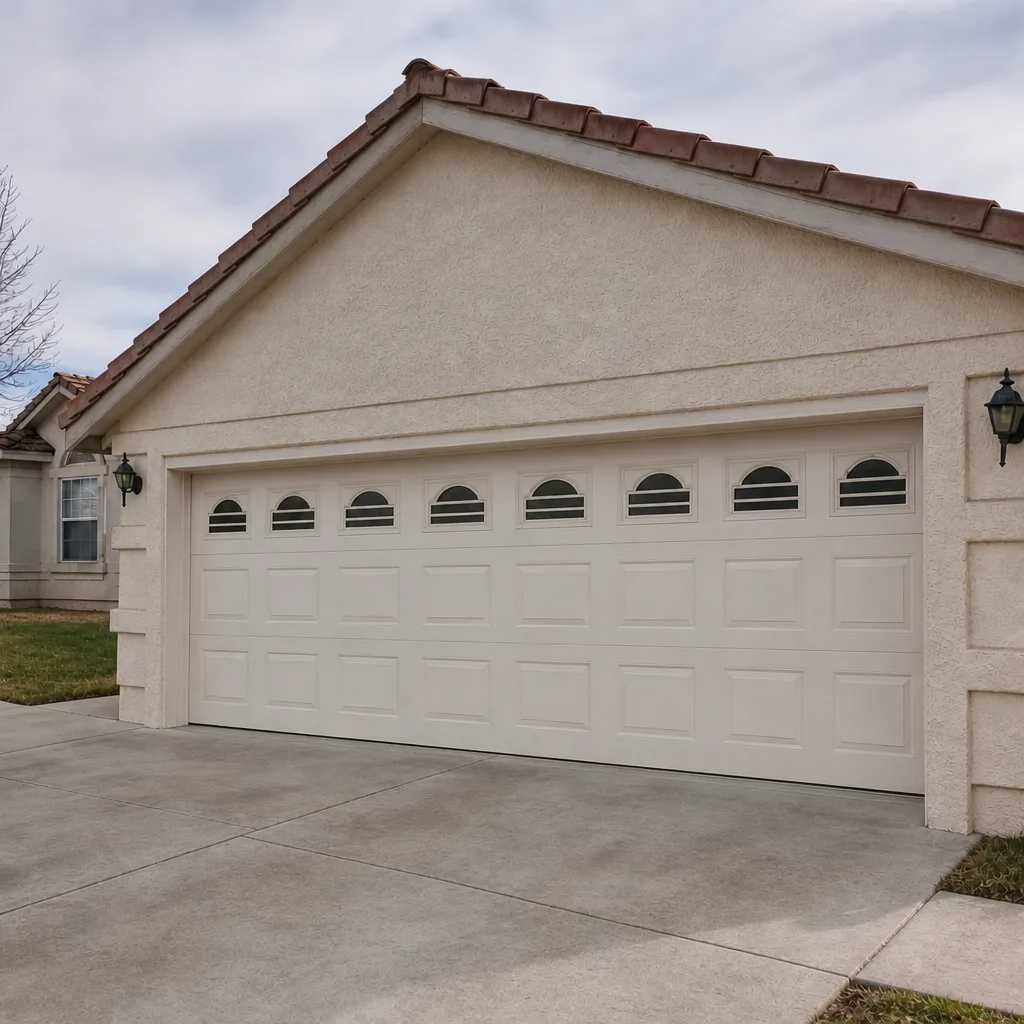
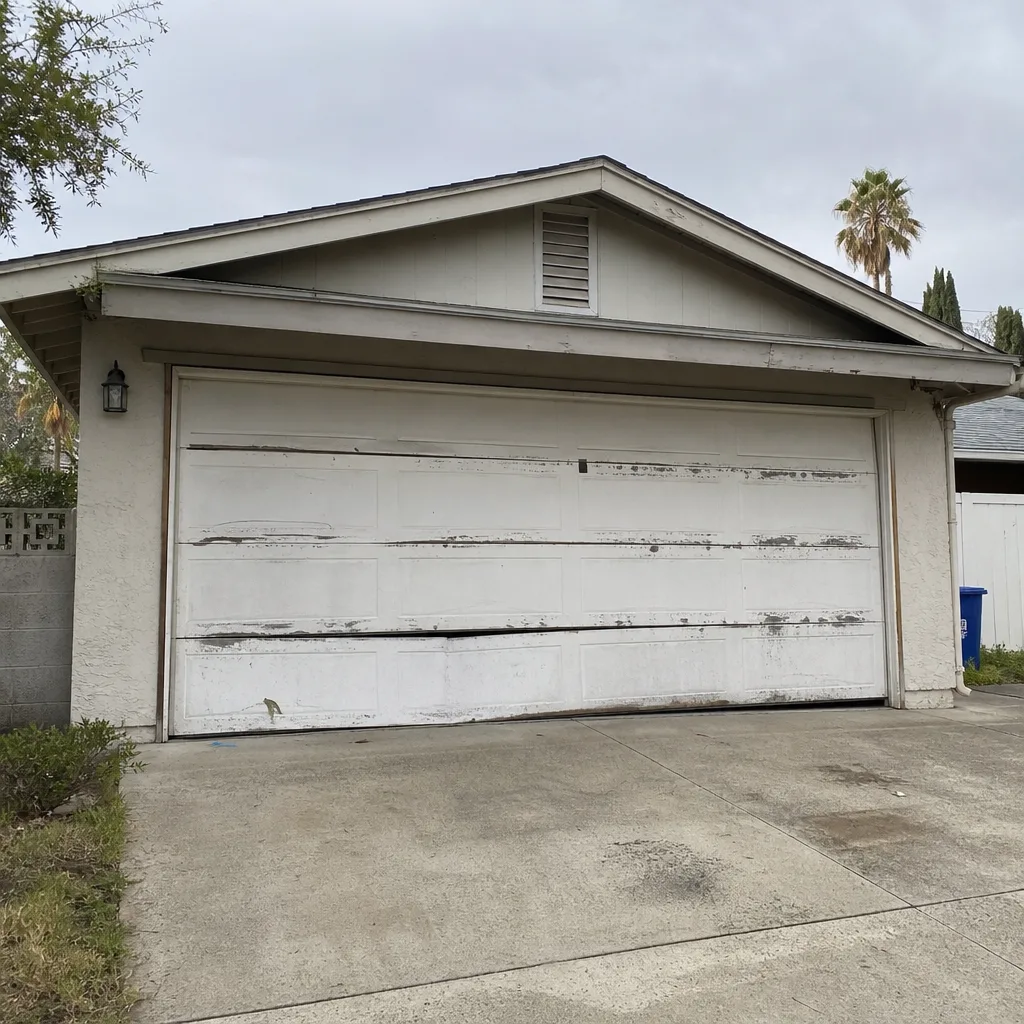
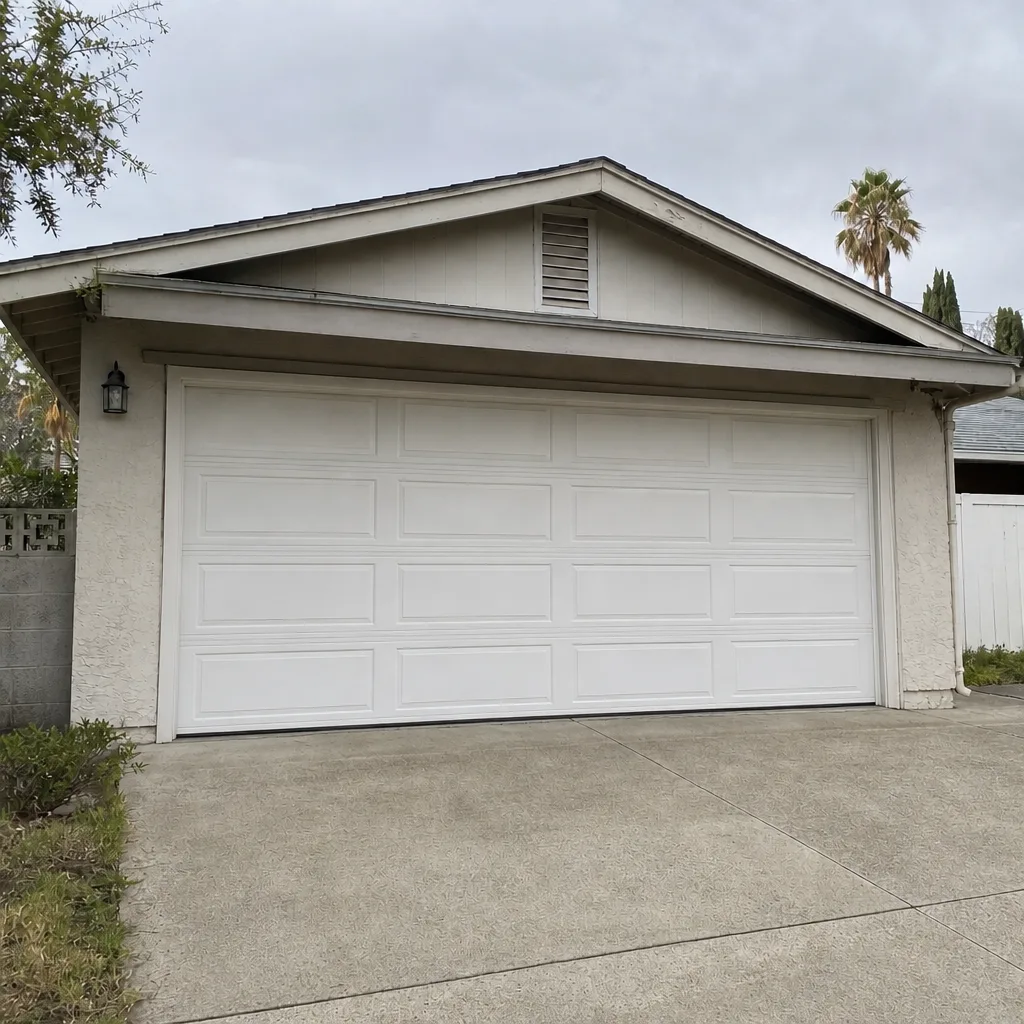
See the difference
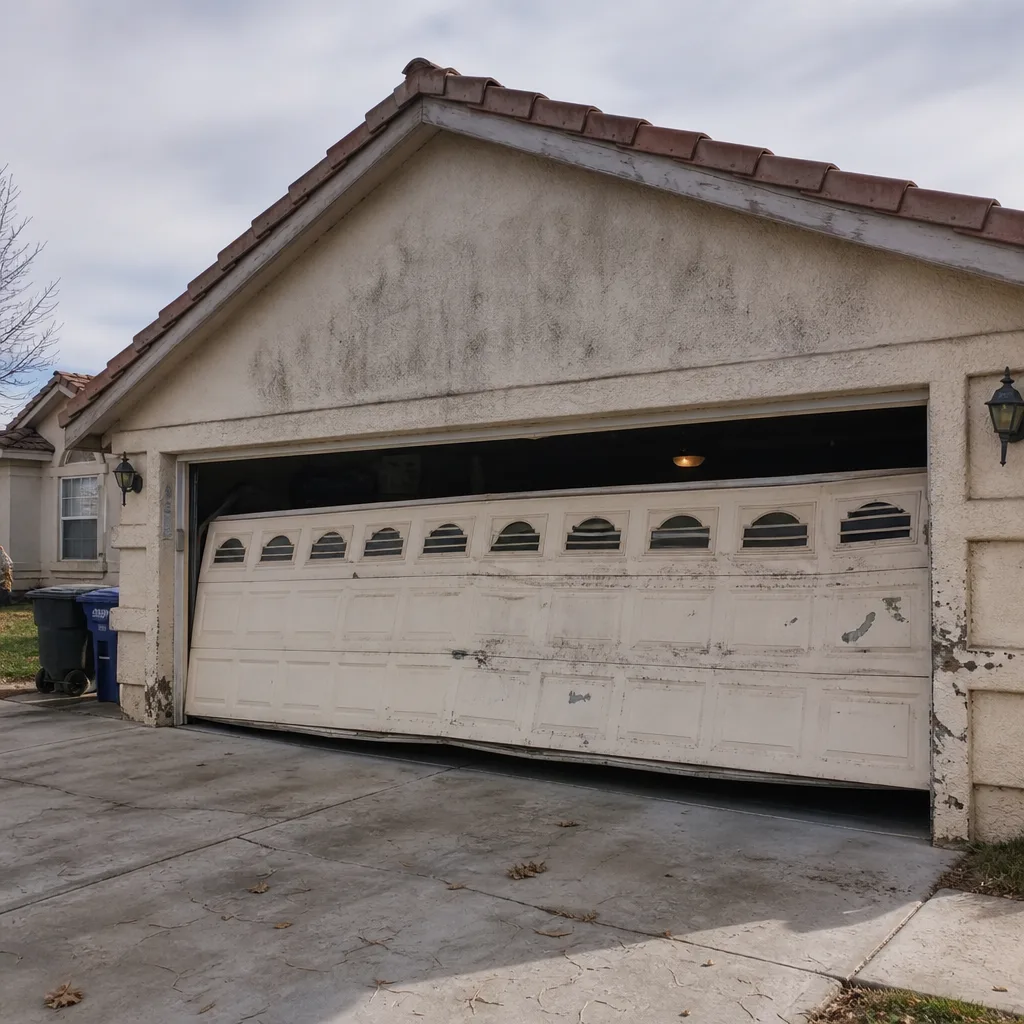 Before
 After
 Before
 After
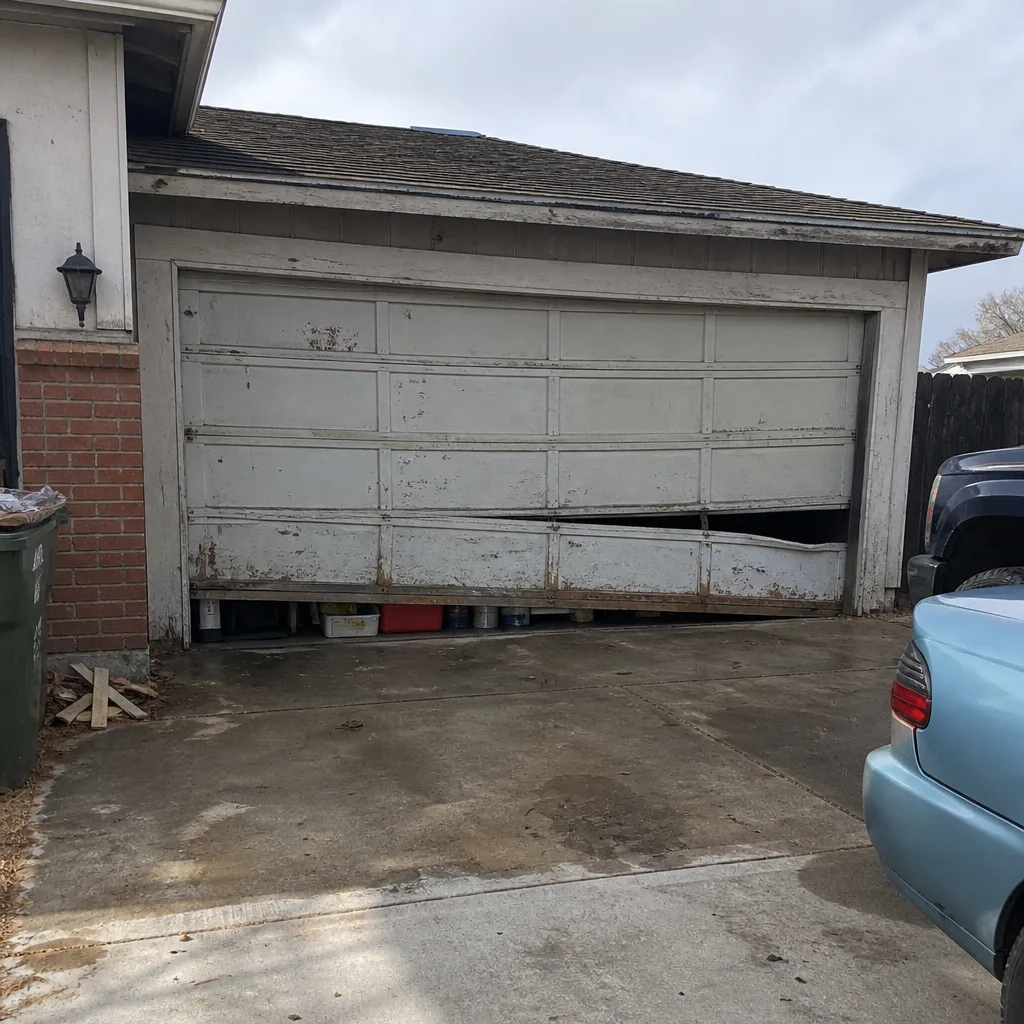 Before
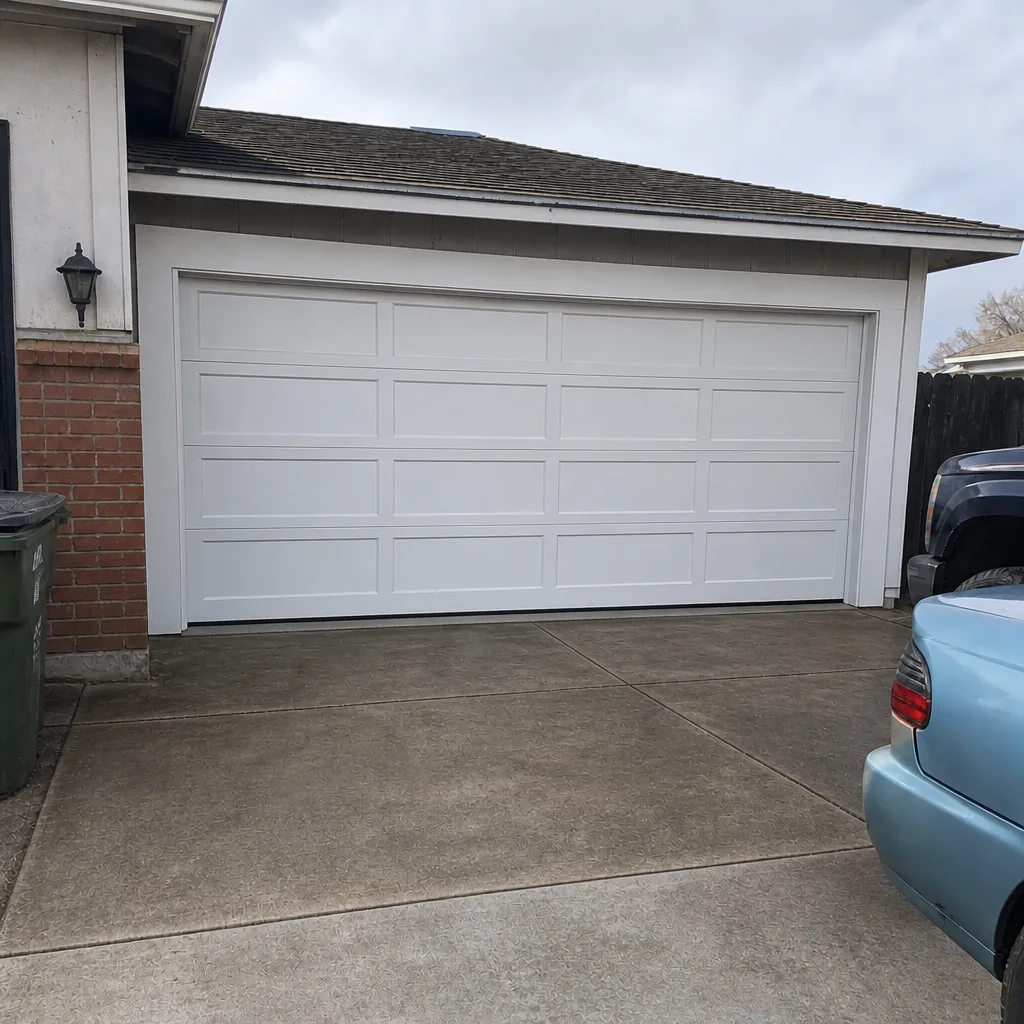 After
When to Call a Professional
Some garage door problems are genuinely beyond a homeowner fix, and Paradise’s conditions make a few of them more likely. Call a professional when a spring snaps or the door won’t hold its balance, when a cable is frayed or loose, when the door binds in the tracks and won’t move freely, when the opener runs but the door doesn’t move, when the door reverses for no obvious reason, or when you’re planning a replacement and want to fix the specification that caused the last failure. Springs and cables are high-tension parts and deserve a trained technician, not a weekend attempt. Belmont Garage Door Service offers free estimates in Paradise – call (844) 665-0023. We answer 24/7, with fast dispatch from 7am to 7pm, Sunday through Friday.
Frequently Asked Questions
An insulated steel door with a high-quality factory finish is usually the best fit for Paradise. Steel handles sustained UV and heat well, resists denting better than aluminum, and an insulated core cuts heat gain in the garage. The finish quality and the bottom seal matter as much as the steel itself.
Often, yes. Many Paradise associations have architectural guidelines that restrict styles, colors, and panel patterns, and some require an application before installation. Get the guidelines in writing and submit for approval before ordering. A door that fails the review is a door you can’t use.
Only match the spec if the old door was well specified and simply aged out. If the finish faded early, the door was never insulated, or the bottom seal never sealed, a like-for-like swap repeats the mistake. Start with why the last door failed and change that.
Repair prices in Paradise depend on the failed component, the door type, and the brand. The written estimate sets the final price, and it’s agreed before any work starts, so there’s no surprise on the invoice. Call (844) 665-0023 for an exact quote – estimates are free.
Yes, our technicians are licensed and insured. Belmont Garage Door Service works on both mechanical door issues and electronic opener faults, and we cover a wide range of leading brands including LiftMaster, Chamberlain, Genie, Clopay, Amarr, Wayne Dalton, Craftsman, and Raynor. Call (844) 665-0023 for a free estimate.
Yes – dust and sun make routine maintenance more important here. Lubricate springs, hinges, and rollers with a garage-door-specific product, clean the sensor lenses, keep the tracks clear of grit, and check the bottom seal for cracks. Leave springs and cables to a professional.
The Bottom Line
Garage doors in Paradise need to be chosen and maintained for UV exposure, dust, and HOA restrictions – not copied from national advice written for cooler, cloudier places. Insulated steel with a strong finish, a sealing bottom seal, and sealed-bearing hardware hold up best. Check HOA rules before you fall for a style, and treat a replacement as a chance to fix the specification that failed, not repeat it. Repair first, replace only when it makes sense, and leave springs and cables to a trained technician. If you’re weighing a repair or a replacement in Paradise, call Belmont Garage Door Service at (844) 665-0023 for a free estimate. We answer 24/7, with fast dispatch from 7am to 7pm, Sunday through Friday.
Written by the team at Belmont Garage Door Service.